

Posted by Editorial Team
on November 18, 2026

Last Updated: November 17, 2026
Quick Summary
The best baby onesies for winter layering are soft, breathable, full-zip styles that fit close to the skin without bulk. Our onesies use a 95% cotton, 5% spandex blend with a full zipper in newborn through 24-month sizes, so you can build thin layers instead of one thick garment.
- Build warmth in three thin layers: a base bodysuit, a thermal onesie, and an outer jacket, bunting, or blanket.
- Cotton offers medium warmth and high breathability, and cotton blends hold up through repeated washing and diaper changes.
- A base-layer onesie should fit close enough to slide a finger under the neckline, but not a whole hand.
- For the car seat, choose the no-hood Inspirational Team USA style or fold the hood flat under the harness.
- Check the back of the neck or chest for overheating, and remove a layer if the skin feels hot or damp.
Which winter onesie fits your baby best?Soft, full-zip baby onesies from newborn to 24 months, made for cozy winter layering.
Shop Baby Onesies
Table of Contents
- Quick Comparison: Best Baby Onesies for Winter Layering
- How to Dress a Baby in Winter: The Layering System That Works
- The Best Fabric for Baby Winter Clothes: Cotton, Bamboo, Merino, and Fleece
- Thermal Onesie Baby Picks: What Makes a Winter Onesie Actually Warm
- Baby Clothes for Cold Weather: Dressing for Walks, Car Seats, and Naps
- Keeping Baby Warm Without Overheating: Signs to Watch
- Shop the Coordinates Baby Onesie Collection for Cozy Season
- Frequently Asked Questions
Quick Comparison: Best Baby Onesies for Winter Layering
The best baby onesies for winter layering are soft, breathable, full-zip styles that fit close to the skin without bulk. At Coordinates, our onesies are made from a 95% cotton, 5% spandex blend with a full zipper for newborn through 24-month sizes.
Below, we compare every winter onesie in our collection so you can match one to your baby's size, your climate, and how you plan to use it. The comparison covers fabric, fit, and price at a glance, then walks through the layering rules that actually keep a baby warm.
| Onesie | Price | Fabric | Best For |
|---|---|---|---|
| Christmas Bold Plaid | $24.00 | 95% cotton, 5% spandex | Everyday holiday wear |
| Christmas Yo Yo Yo | $24.00 | 95% cotton, 5% spandex | Playful loungewear |
| Christmas Snowflake | $29.00 | 95% cotton, 5% spandex | Photo-ready festive looks |
| Christmas Soft Plaid | $29.00 | 95% cotton, 5% spandex | Cozy cuddles and naps |
| Christmas Legacy Plaid | $29.00 | 95% cotton, 5% spandex | Classic family matching |
| Team USA Plaid | $29.00 | 95% cotton, 5% spandex | Game day and gatherings |
| Inspirational Team USA | $29.00 | Soft cotton knit | Patriotic everyday wear |
Price
Christmas Bold Plaid $24.00
Christmas Yo Yo Yo $24.00
Christmas Snowflake $29.00
Christmas Soft Plaid $29.00
Christmas Legacy Plaid $29.00
Team USA Plaid $29.00
Inspirational Team USA $29.00
The Christmas onesies listed above feature a full zipper, ribbed cuffs, and jogger-style pants.
How to Dress a Baby in Winter: The Layering System That Works
Dressing a baby for winter means building warmth in thin, breathable layers rather than one thick garment. Layering lets you add or remove thin pieces as conditions change.
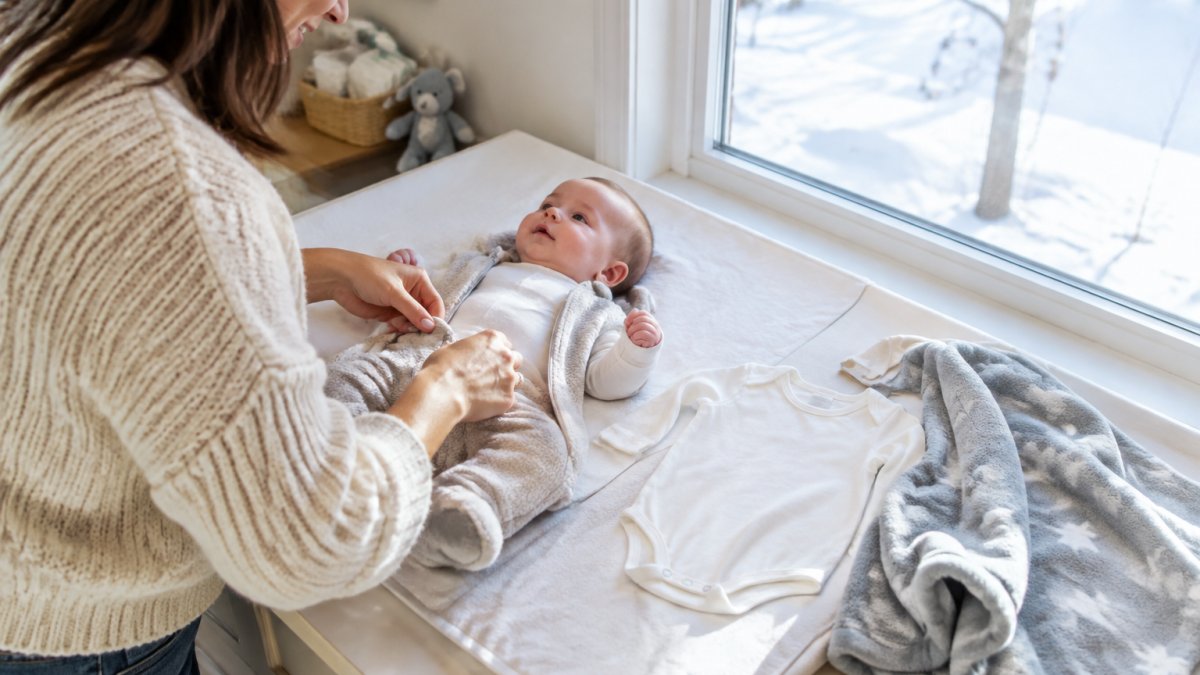
The Three-Layer Rule, Explained for Parents
Think of it as base, mid, and outer. The base layer is a thin long-sleeve bodysuit that wicks moisture and sits against the skin. The mid layer is your thermal onesie, the cozy piece that holds warmth. The outer layer is a jacket, bunting, or blanket for the walk itself, removed once you are back inside.
A common mistake is skipping the base layer on mild winter days and going straight to a heavy onesie. In practice, that traps sweat against the skin and makes a baby fussy the moment they warm up indoors.
The Best Fabric for Baby Winter Clothes: Cotton, Bamboo, Merino, and Fleece
Cotton is a common choice for baby clothing because it is soft and breathable. Our onesies use a cotton blend.
For parents comparing natural fibers in more depth, our guide to the best natural fabrics for newborn sleepwear breaks down how each one feels and wears.
Fabric and Care Trade-Offs at a Glance
| Fabric | Warmth | Breathability | Care |
|---|---|---|---|
| Cotton | Medium | High | Machine wash, holds shape |
| Bamboo | Medium | Very high | Gentle cycle, dries slowly |
| Merino wool | High | High | Hand wash or wool cycle |
| Fleece | High | Low | Machine wash, pills over time |
Cotton blends like our 95% cotton, 5% spandex hold up through repeated washing and diaper changes, which matters more than most parents expect. If you want to keep those fabrics soft for years, our guide on maintaining softness in kids clothing covers the wash routine.
Thermal Onesie Baby Picks: What Makes a Winter Onesie Actually Warm
Fit and details such as full-length legs and ribbed cuffs are features to look for in a winter onesie.
When choosing a winter onesie, consider these details:
- Fit through the torso: A base-layer onesie should sit close enough that you can slide a finger under the neckline but not a whole hand. Extra fabric bunches under a mid layer and under a car-seat harness.
- Closures: A full front zipper makes diaper changes quicker.
- Cuffs and hems: Ribbed cuffs are a feature of these onesies.
- Hood versus no hood: A hood adds warmth without a separate hat that slips off, but a hood bunches behind the head in a car seat and should be folded flat or the hooded onesie reserved for stroller and carrier use.
- Fabric weight: Our 95% cotton, 5% spandex onesies are made from a knit fabric.
Here is how our winter picks compare on the details that matter:
| Onesie | Price | Fabric | Closure | Hood | Best For |
|---|---|---|---|---|---|
| Christmas Bold Plaid | $24.00 | 95% cotton, 5% spandex | Full zipper | Yes | Everyday holiday wear |
| Christmas Yo Yo Yo | $24.00 | 95% cotton, 5% spandex | Full zipper | Yes | Playful loungewear and pajamas |
| Christmas Snowflake | $29.00 | 95% cotton, 5% spandex | Full zipper | Yes | Photo-ready festive looks |
| Christmas Soft Plaid | $29.00 | 95% cotton, 5% spandex | Full zipper | Yes | Cozy cuddles and naps |
| Christmas Legacy Plaid | $29.00 | 95% cotton, 5% spandex | Full zipper | Yes | Classic family matching |
| Team USA Plaid | $29.00 | 95% cotton, 5% spandex | Full zipper | Yes | Game day and gatherings |
| Inspirational Team USA | $29.00 | Soft cotton knit | Full zipper | No | Patriotic everyday wear |
The listed styles include ribbed cuffs and jogger-style pants, with full zippers for newborn through 24-month sizes.
How to choose by use case: For a base layer under a jacket or bunting, pick a thin long-sleeve bodysuit first and add a onesie only if the day is cold. For indoor wear and naps, a single breathable onesie like the Christmas Soft Plaid is enough in a heated room. For stroller walks and carrier use, a hooded onesie plus a hat, mittens, and a bunting or carrier cover covers the outdoor stretch. For the car seat, choose the no-hood Inspirational Team USA style or fold the hood flat, and add blankets over the buckled harness rather than under it.
If you are weighing whether a higher price is worth it, our case for premium baby clothing explains what quality construction actually buys you.
Baby Clothes for Cold Weather: Dressing for Walks, Car Seats, and Naps
Baby clothes for cold weather can be adjusted to the activity, using thin layers for the car seat and added outer layers for outdoor walks.
For outdoor walks and cold-weather outings, add a hat, mittens, and a carrier cover or stroller bunting over the onesie. Remove the outer layer the moment you step inside.
Car-Seat-Safe Layering: What Goes Under the Harness
Bulky coats and thick buntings should not go under a car seat harness, because they can create slack in the straps. Buckle the harness snug against the body, and add a blanket over the top once buckled.
Keeping Baby Warm Without Overheating: Signs to Watch
Overheating is a risk in winter dressing. Signs that a baby may be too warm can include feeling hot or clammy at the chest, flushed cheeks, or sweating at the neck.
Check the back of the neck or the chest rather than the hands and feet, which run cooler naturally (Temperature control). If the skin feels hot or damp, remove a layer. If it feels cool and the baby is also lethargic, add a thin layer and check again in a few minutes.
Indoor layering versus outdoor layering. Outdoors, the same baby needs the base layer, the onesie, and an outer layer that comes off the moment you step back inside, the mistake is leaving the outdoor layers on in a warm car or store.
A practical check by activity:
- Indoor, awake: one onesie over a bodysuit; check the neck every hour or so.
- Indoor, asleep: a single breathable onesie or a sleep sack rated for the room; skip the heavy mid layer.
- Stroller walk: base layer, onesie, hat, mittens, and a bunting or stroller cover; unzip the cover as soon as you are indoors.
- Carrier: dress the baby in the same thin layers you would indoors, then add a carrier cover over the outside of the carrier rather than dressing the baby in a coat.
- Car seat: thin base layer plus fitted onesie under the harness, blanket over the top once buckled.
If your baby's skin is prone to irritation, our guide on choosing laundry detergent for baby eczema explains which formulas are gentler on sensitive skin.
Shop the Coordinates Baby Onesie Collection for Cozy Season
Cozy season is easier when the whole family matches, and our baby onesies are built for exactly that. Each piece is inspired by family, with a soft cotton blend, a full zipper, and sizes from newborn to 24 months.
Ready to build the set? Shop the Christmas Soft Plaid Onesie to start your family's matching holiday look, then add adult and kids sizes to complete it.
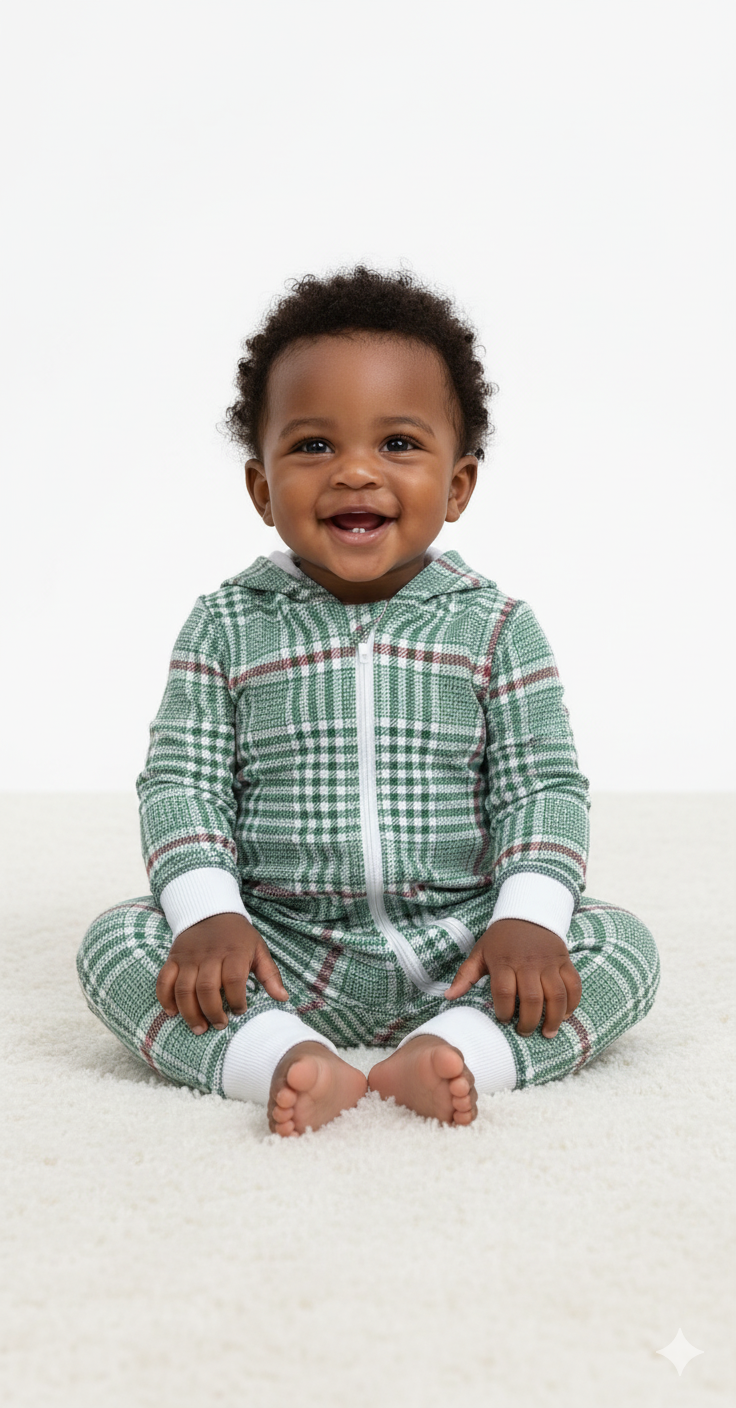
Winter layering gets simple once you have the right base piece: a breathable, full-zip onesie that fits close and moves with your baby. Coordinates makes that piece in sizes from newborn to 24 months, with soft cotton-spandex fabric, a full zipper for easy changes, and hooded designs for extra warmth. Build your family's matching set and keep everyone cozy from first snow to holiday morning. Get started with Coordinates and dress your baby for warmth without the fuss.
Frequently Asked Questions
What are the best baby onesies for winter layering?
Look for a soft cotton-spandex blend that stretches without sagging, a full-length zipper for quick diaper changes, and ribbed cuffs that seal out drafts. A hooded design adds warmth for stroller walks but should be removed before sleep. Coordinates' baby onesies use a 95% cotton, 5% spandex blend in sizes newborn to 24 months, priced from $24 to $29, which makes them a practical base layer under a sleep sack or bunting.
Are thermal onesie baby styles warm enough on their own in winter?
A thermal onesie is best used as a layer rather than a coat. For outdoor walks, add an outer layer such as a stroller bunting. Indoors, a single thermal onesie plus a sleep sack usually keeps a newborn comfortable. Check the back of the neck to confirm warmth rather than relying on hands and feet.
How can I tell if my baby is too warm while wearing layers?
Touch the back of your baby's neck or chest. Warm and dry means the layering is right. Sweaty, clammy, or flushed skin can mean it is time to remove a layer. Cool skin can mean adding one. Check the back of the neck or chest rather than the hands and feet.
Do babies need to wear onesies under clothes in winter?
Yes, in most cases. A long-sleeve bodysuit worn under pants and a sweater keeps the torso covered when clothes ride up during lifting and crawling. Choose a breathable base layer, then add the outer outfit. For car seats, keep layers thin under the harness and add blankets over it.


