

Posted by Editorial Team
on October 12, 2026

Table of Contents
- Why Kids Clothing Gets Rough (and How to Stop It)
- How to Wash Kids' Clothes So Softness Lasts
- The Best Detergent for Kids' Clothes: What to Look For
- How to Dry Children's Clothes Without Stiffness
- Fabric-Specific Care: Cotton, Organic Cotton, and Bamboo
- How to Get Baby Clothes Soft Again: Reviving Stiff Fabrics
- Fabric Softener Trade-Offs and Safer Alternatives
- Conclusion
- Frequently Asked Questions
Last Updated: October 12, 2026
Why Kids Clothing Gets Rough (and How to Stop It)
Softness in kids clothing fades for one main reason: heat and residue.
This guide from Coordinates covers how to maintain softness in kids clothing, from wash day to storage, the same rules that protect our family loungewear protect everything else in your laundry pile.
Kids clothing softness is a fabric's ability to stay smooth and flexible after repeated washing and wearing. Cotton, bamboo, and cotton-blend knits hold softness best when washed cool, rinsed well, and dried gently.
Here is what we will cover:
- How to sort and pretreat stains
- Which cycle and temperature to use
- What to look for in a kids' detergent
Key Takeaway
Softness is not a one-time feature. It is something you protect with every wash. Cool water, less detergent, and low heat do most of the work.
How to Wash Kids' Clothes So Softness Lasts
Washing kids' clothes so they stay soft comes down to three things: gentle detergent, cool water, and a short, low-heat dry. Skip any one and fabrics feel stiff within a few washes.
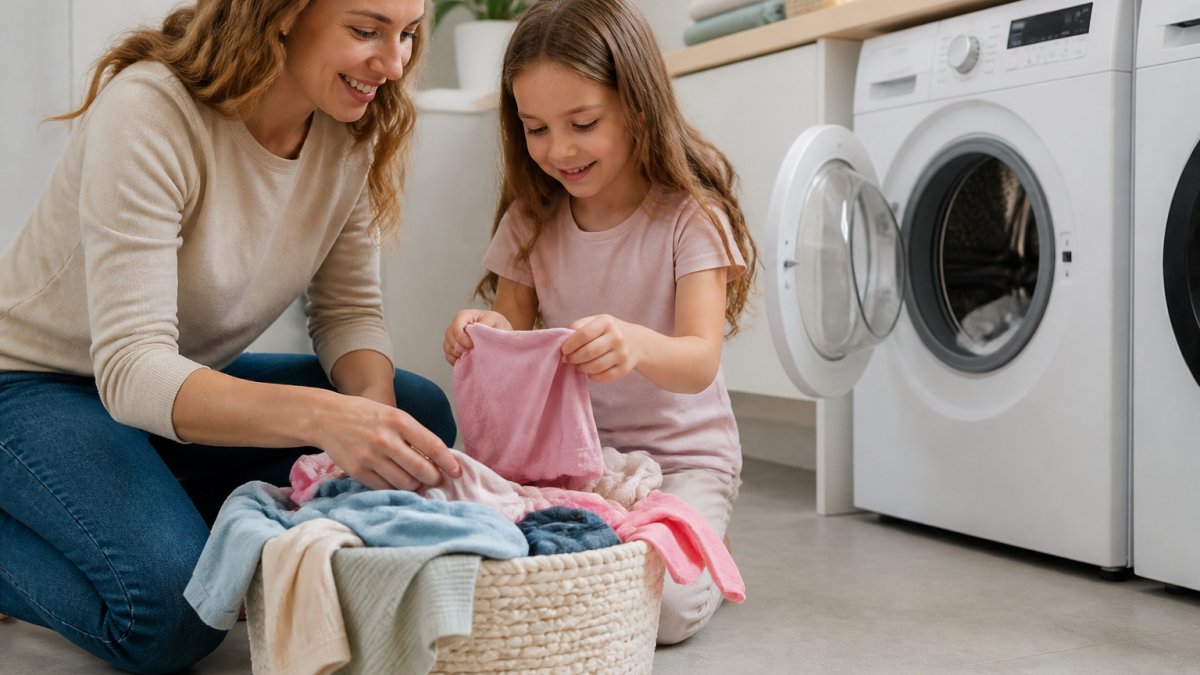
Step 1: Sort and Pretreat Stains
Separate lights and darks, then pretreat stains first, this prevents most of the damage that makes clothes feel rough.
- Check the care label first. It tells you the safe temperature and whether to tumble dry.
- Treat food stains and grass marks with a small amount of gentle detergent.
- Let pretreat sit for 10 minutes, then blot. Do not rub, which pushes stains deeper.
For baby clothes, pretreat quickly. Milk and food stains set fast and can leave fabric stiff if they dry in.
Step 2: Choose the Right Cycle and Temperature
Use cold or lukewarm water on a gentle or delicate cycle, the single biggest change you can make. Hot water shrinks cotton and breaks down stretch fibers, while cold water cleans everyday messes just as well and protects color.
- Cold water: best for colors, stains, and everyday wear
- Lukewarm water: fine for heavily soiled items
- Hot water: only for items like cloth diapers, never for soft knits
Add an extra rinse if your machine allows it. It flushes out leftover detergent, which is a hidden cause of stiffness.
Pro Tip
If your washer has a "bulky" or "heavy duty" setting, skip it for kids' clothes. Those cycles use more agitation, which wears down soft fibers faster than a gentle cycle.
The Best Detergent for Kids' Clothes: What to Look For
The best detergent for kids' clothes is a gentle, dye-free, fragrance-free formula that rinses clean in cold water. Look for "free and clear" on the label, but the dose matters more than the bottle you buy.
Detergent residue is the number one reason clothes feel stiff and scratchy. Too much detergent or too short a rinse leaves residue that dries into a rough film trapping body oils and odor, which is why a shirt can smell faintly sour even after washing.
What to look for on the label
- Hypoallergenic, free of dyes and fragrance. Fragrance is the most common cause of contact irritation in children's clothing, and "baby" on the label does not guarantee a fragrance-free formula.
- Plant-based or neutral-pH surfactants. These rinse more completely in cold water than heavy petroleum-based formulas.
- Concentrated formulas. You use less per load, so less residue is left behind.
What to avoid
- Detergents with heavy perfume, bleach, or fabric-softener additives
- Pods that do not fully dissolve in cold water, undissolved film causes stiff patches
- Powder detergent in hard-water areas, where it leaves a chalky mineral film
How much detergent to actually use
The measuring cup that comes with detergent is sized for a large, heavily soiled adult load, not a small load of kids' clothes.
- Small load (about a quarter of the drum): 1 to 2 tablespoons of liquid detergent
- Medium load (half the drum): 2 to 3 tablespoons
- Full load: follow the label's lowest recommended line, not the top
If clothes come out stiff or slightly slick, reduce the dose, not increase it. Parents often double detergent when clothes still smell, but the real fix is a shorter cycle, a smaller load, or an extra rinse.
Softness versus skin sensitivity
A detergent that keeps fabric soft and one that keeps skin calm are not always the same product. Fragrance-free, dye-free formulas are the safest default for babies, toddlers, and any child with eczema or contact dermatitis. If a detergent claims to be "gentle" but lists fragrance or essential oils, treat it as a fragrance product. Choosing these hypoallergenic options also supports the broader goal of maintaining fabric integrity, especially when managing the specialized fibers found in sun-protective clothing.
Pro Tip
If you are not sure whether your current detergent is leaving residue, run one clean load of kids' clothes with no detergent at all and an extra rinse. If they feel noticeably softer afterward, your regular dose is too high.
How to Dry Children's Clothes Without Stiffness
Air-drying is the easiest way to keep children's clothes soft, hang or lay items flat and they come out smooth without heat damage. Heat tightens fibers and can shrink cotton, fade color, and break down stretch, so if you must use a machine, choose low heat and pull items out slightly damp.
Drying methods, ranked by how well they protect softness:
| Method | Heat Level | Softness Result | Best For |
|---|---|---|---|
| Air dry (hang or flat) | None | Best | Everyday wear, knits |
| Tumble dry low | Low | Good | Pajamas, towels |
| Tumble dry medium | Medium | Fair | Sturdy cotton only |
| Tumble dry high | High | Poor | Not recommended |
A few drying habits that help:
- Shake items out before hanging to relax the fibers
- Dry inside out to protect prints and color
- Keep delicates out of direct sun, which can fade them
For baby clothes, air-drying is worth the extra time. Small items dry fast and stay gentle on sensitive skin.
Fabric-Specific Care: Cotton, Organic Cotton, and Bamboo
Different fabrics need different care, and treating them the same can wear them out faster.
Cotton is durable and breathable, a staple in kids' clothing.
Organic cotton behaves much like regular cotton but is grown without synthetic pesticides.
Bamboo is naturally soft but more delicate.
Christmas Legacy Plaid Set (Kids) →
A quick care guide by fabric:
| Fabric | Wash Temp | Dry Method | Watch Out For |
|---|---|---|---|
| Cotton | Cold to warm | Low heat or air | Shrinkage from high heat |
| Organic cotton | Cold | Air dry | Same as cotton |
| Bamboo | Cold only | Air dry | Heat damage, stiffness |
| Cotton-spandex blend | Cold | Low heat | Stretch loss from heat |
Our own sets, like the Christmas Legacy Plaid Set (Kids), use a 95% cotton, 5% spandex blend.

How to Get Baby Clothes Soft Again: Reviving Stiff Fabrics
Baby clothes that have gone stiff can almost always be brought back, but not always, and not the same way for every fabric. The fix depends on the cause and whether the fiber is still intact.
If onesies and sleepers feel rough, the cause is usually detergent residue, mineral buildup from hard water, heat damage from a hot dryer, or fiber breakdown from friction.
Step 1: Diagnose before you treat
Before you strip or re-wash anything, identify the problem.
- Stiff but still smooth: almost always residue or mineral film. Reversible.
- Stiff and slightly rough or fuzzy: fiber damage from friction or pilling. Partially reversible at best.
- Stiff, shrunken, or misshapen: heat damage. Usually permanent.
Step 2: Strip the residue
- Rinse first. Run a plain cold-water rinse with no detergent to loosen residue.
- Wash with less soap. Use half the normal amount of a gentle, dye-free detergent.
- Skip fabric softener. It coats fibers with a waxy layer that makes stiffness worse.
- Add 1/2 to 1 cup of white vinegar to the rinse dispenser. This mild acid dissolves calcium and magnesium residue and rinses clean.
- Run an extra rinse if your machine allows it, the step most people skip and the one that matters most.
- Air-dry. Heat sets stiffness in, so dry on a line or rack.
- Shake the fabric once dry to relax the fibers.
If one strip cycle does not work, repeat it once. If two cycles do not help, the stiffness is likely fiber damage, and more washing will only wear the fabric further.
Step 3: Match the treatment to the fabric
Not every baby garment responds the same way. Treating a bamboo sleeper like a cotton onesie can make things worse.
| Fabric | Safe revival method | What to avoid |
|---|---|---|
| Cotton | Warm rinse, vinegar rinse, air dry, shake out | High heat, bleach |
| Organic cotton | Same as cotton; gentler detergent | Optical brighteners, hot dryer |
| Bamboo / bamboo viscose | Cold rinse only, lay flat to dry | Heat, wringing, high spin |
| Cotton-spandex blend | Cold rinse, low spin, air dry | Hot water, hot dryer (kills stretch) |
| Fleece | Cold rinse, tumble low with dryer balls, brush nap | High heat (melts and mats the nap) |
| Wool | Cold hand-wash with wool-safe detergent, lay flat | Agitation, vinegar in high concentration, heat |
Step 4: When stiffness is permanent
Some damage cannot be undone. After repeated hot washes and hot dryer cycles, fibers may have permanently tightened, pilled, or lost their stretch. Signs it is time to retire the item:
- The fabric feels thin or see-through in high-wear areas
- Elastics have lost their snap and stay stretched out
- Pilling returns within one wear after you de-pill it
No safe home treatment restores fiber that has already broken down, and continuing to strip and re-wash damaged fabric accelerates the wear.
Preventing the next round of stiffness
Once you have revived what you can, keep it soft with three habits:
- Dose detergent by load size, not by the cap. A small load of baby clothes needs 1 to 2 tablespoons.
- Add an extra rinse to every baby load, the cheapest softness insurance you have.
- Air-dry whenever possible. If you must use the dryer, use low heat and pull items out slightly damp.
Pro Tip
If you live in a hard-water area, a monthly washer cleaning cycle with vinegar or a commercial washer cleaner prevents mineral buildup in the drum from redepositing on the next load of baby clothes.
Watch Out
Never mix bleach and vinegar, and never pour undiluted vinegar directly onto fabric. Add it to the rinse dispenser or dilute it in water first. Straight vinegar can weaken elastics and some fibers over time.
Fabric Softener Trade-Offs and Safer Alternatives
Fabric softener feels like the obvious answer, but it coats fibers with a thin waxy layer that feels soft at first and builds up over time.
The problems with liquid softener:
- It reduces absorbency, which matters for towels and baby items
- It can trap odors and detergent residue in the fabric
- It can irritate sensitive skin
Safer alternatives that actually work:
- Wool dryer balls to separate clothes and cut drying time
- White vinegar in the rinse cycle as a natural softener
- A shorter dry time so fibers do not over-dry
If you love the smell of softener, use dryer sheets sparingly and only on items that do not touch sensitive skin. For baby clothes and pajamas, skip them.
Conclusion
Keeping kids' clothes soft is not about buying special products. It is about a simple routine: cool water, gentle detergent, and low heat. Get those three right and fabric stays soft through hundreds of washes.
At Coordinates, we build our family loungewear around that idea. The Team USA Plaid Set (Kids) is made from 100% cotton knit for comfort and movement, and the Christmas Soft Plaid Set (Kids) pairs a 95% cotton, 5% spandex blend with an easy elastic waist.


Ready to keep everyone comfortable? SHOP COLLECTION and find soft, durable pieces made to last.
Frequently Asked Questions
How do I get baby clothes soft again after they've turned stiff?
Stiffness usually comes from detergent residue or mineral buildup. Run the items through a rinse cycle with half a cup of white vinegar, then wash with a gentle, dye-free detergent and skip fabric softener. Dry on low heat or air-dry. For cotton blends, a short tumble on low with wool dryer balls helps break up stiffness without high heat. Always check the care label first, and avoid overloading the washer.
Do I need to wash new kids' clothes before wearing them?
Yes. New garments often carry sizing agents, dyes, and dust from manufacturing and shipping that can irritate sensitive skin. A single wash with a gentle detergent in cold water removes most of it and softens the fabric. This is especially important for baby clothes and anything worn against the skin. Turn items inside out, wash with similar colors, and dry on low to protect the finish.
Does fabric softener actually make kids' clothes softer?
It coats fibers with a waxy film that feels soft at first but builds up over time, reducing absorbency and breathability. That residue can trap odors and irritate sensitive skin. For kids' clothes, a gentle detergent plus cold water and low-heat drying keeps fabric soft naturally. If you want extra softness, add half a cup of white vinegar to the rinse cycle instead.
How should I wash and dry kids' clothes to prevent them from getting rough?
Wash in cold or lukewarm water on a gentle cycle with a small amount of mild detergent. Avoid overloading the drum. Add an extra rinse if your machine allows it. Dry on low heat or air-dry; high heat damages fibers and causes stiffness. If clothes feel rough, a vinegar rinse and a low tumble with dryer balls can restore softness. Always follow the care label for temperature and drying instructions.
Sources and further reading: American Cleaning Institute laundry guidance, U.S. Consumer Product Safety Commission care label rules, and U.S. Environmental Protection Agency on water quality.



