

Posted by Editorial Team
on October 01, 2026

Table of Contents
- Why Bamboo Fabric Works for Family Loungewear
- Bamboo Viscose vs Cotton for Pajamas
- Is Bamboo Fabric Hypoallergenic?
- Thermoregulation and Moisture-Wicking for Every Season
- How to Wash Bamboo Clothing
- The Environmental Reality: Greenwashing vs. Genuine Sustainability
- Sensory Comfort and Sleep Quality for the Whole Family
- Frequently Asked Questions
Last Updated: October 1, 2026
Why Bamboo Fabric Works for Family Loungewear
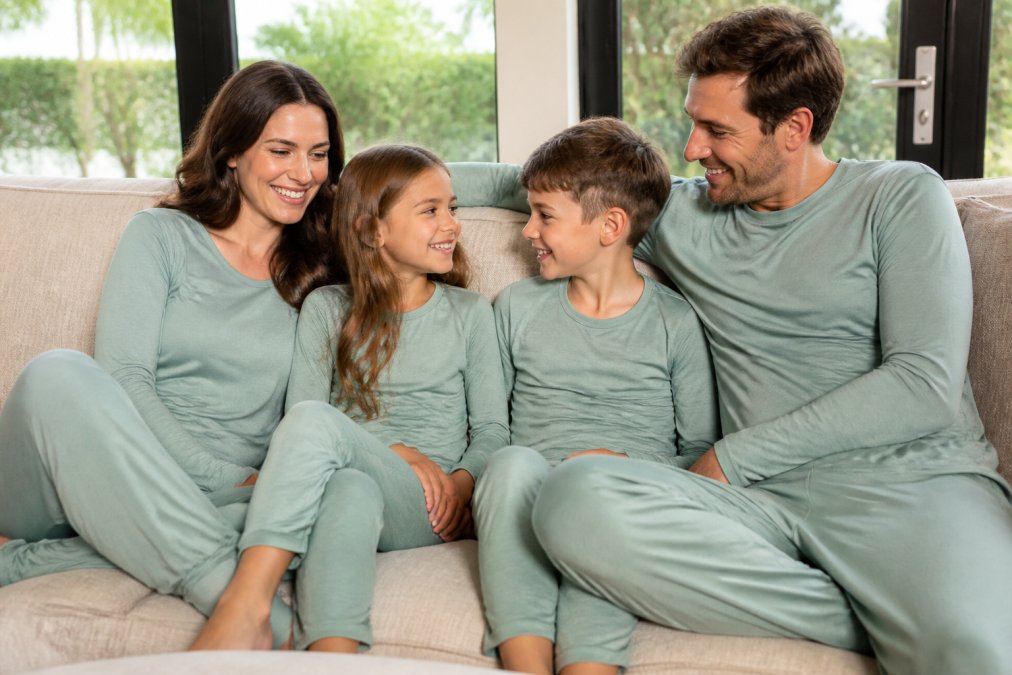
Bamboo fabric is a textile made from the pulp of the bamboo plant, and it has become one of the most talked-about materials in family loungewear for good reason. The benefits of bamboo fabric for family loungewear come down to three things parents actually care about: softness against skin, breathability through long evenings on the couch, and durability through the wash cycle. At Coordinates, we offer family collections designed with comfort in mind, because we know cute matching sets that scratch or pill never get worn twice.
Here is the part most guides skip. Bamboo is not automatically softer than cotton just because it is bamboo. A cheaply finished bamboo knit can feel slick and clammy. The fabric earns its reputation only when the fiber is processed carefully and blended correctly. Below, we break down what bamboo actually does well, where it falls short, how to wash it, and how to tell real sustainability claims from marketing noise.
Key Takeaway
Bamboo loungewear works best when it is blended, not pure. A small percentage of spandex or cotton adds structure and wash durability that pure bamboo knits often lack.
Bamboo Viscose vs Cotton for Pajamas
Bamboo viscose is a regenerated cellulose fiber made by dissolving bamboo pulp and extruding it into threads, while cotton is a natural fiber picked and spun directly from the plant. That single difference explains almost every practical distinction between the two in pajamas.
Cotton is the baseline for a reason. It is breathable, widely available, and holds up to repeated washing. Where it struggles is moisture management during sleep. Cotton absorbs sweat and holds it against the skin, which is why a cotton pajama shirt can feel damp and heavy by 3 a.m. Bamboo viscose moves moisture away from the body faster and dries more quickly, so the fabric feels cooler and drier during the night.
For families, the trade-off looks like this:
- Softness: Bamboo viscose has a smoother, silkier hand feel than standard cotton. Pima and Supima cotton close much of that gap.
- Moisture: Bamboo viscose wicks and dries faster. Cotton absorbs and holds.
- Durability: Cotton generally wins. Bamboo viscose can pill and stretch if it is washed hot or tumble-dried on high.
- Price: Bamboo viscose usually costs more per yard because the fiber takes more processing to produce.
- Care: Cotton tolerates neglect. Bamboo viscose does not.
There is also a third option worth knowing about. Lyocell, sold under brand names like Tencel, is made through a closed-loop solvent process that recovers most of the chemicals used. If environmental impact matters to you, lyocell bamboo and lyocell from other cellulose sources are the more responsible pick within this fiber family.
The honest verdict: for year-round pajamas in a household that washes often, a bamboo-cotton blend gives you most of the softness with better longevity than pure bamboo viscose.
Is Bamboo Fabric Hypoallergenic?
Bamboo fabric is generally considered hypoallergenic because its fiber surface is smoother than wool or standard cotton, creating less friction against skin, and because the dense knit resists the dust mites and mold that commonly trigger reactions. That said, "hypoallergenic" describes the fiber, not every finished garment, and the gap between the two is where most skin complaints actually originate.
The distinction matters for parents of kids with sensitive skin. A bamboo shirt can still trigger irritation if it is dyed with harsh reactive dyes, finished with chemical softeners, or washed in a detergent the child reacts to. The fiber is not the problem in those cases, the finishing is. This is why two bamboo pajamas at the same price can behave completely differently on the same child.
What bamboo does offer for sensitive skin:
- Reduced friction: The smooth texture means less rubbing along seams, cuffs, and waistbands, which helps with eczema-prone skin where mechanical irritation is a known flare trigger.
- Moisture control: Less trapped sweat means less of the damp, warm environment where irritation and itchiness intensify.
- Lower mite and mold load: The tight weave and quick-drying behavior make the fabric a less hospitable surface for common household allergens than heavier, slower-drying knits.
- Natural antibacterial properties: Bamboo contains a compound called bamboo kun that inhibits odor-causing bacteria. Note that this property is strongest in raw bamboo and diminishes through heavy processing, so treat antibacterial claims on finished garments with skepticism.
A practical triage for parents, in order of what usually causes reactions:
- Detergent and softener residue, the most common culprit. Switch to a fragrance-free, dye-free liquid detergent and skip fabric softener entirely.
- Dyes and finishes, if a garment is brightly colored or feels slick and coated, wash it two or three times before first wear to shed surface chemistry.
- Fit and seams, a snug cuff or a raised seam can irritate even a perfectly finished fabric. Size up if the child is between sizes.
- The fiber itself, least likely, but possible. If reactions persist after the first three are addressed, the fiber may genuinely not suit that child.
If your child has a diagnosed skin condition, patch-test any new garment on a small area first, and wash it before the first wear.
Thermoregulation and Moisture-Wicking for Every Season
Thermoregulation is the ability of a fabric to help your body hold a steady temperature, and bamboo's breathable structure makes it unusually good at this for a plant-based fiber. The mechanism is structural: bamboo viscose fibers are extruded with a cross-section that contains tiny voids and irregular channels, which gives air more paths to move through the fabric than the flatter, more uniform cross-section of cotton.
How the seasons actually play out:
- Summer: The open fiber structure and fast drying keep the fabric from clinging. Loose fits outperform snug ones because airflow across the skin does half the work.
- Winter: Bamboo works as a base layer under a blanket or a robe. It traps a thin layer of warm air without the bulk that makes kids kick off covers.
- Transition months: This is where bamboo earns its keep. A fabric that handles a 20-degree swing between afternoon and evening means fewer wardrobe changes and fewer bedtime negotiations.
How to Wash Bamboo Clothing
Washing bamboo clothing correctly is the single biggest factor in how long it lasts. Bamboo viscose fibers are weaker when wet, so heat and agitation are the two things that destroy them fastest. Treat bamboo like you would a delicate sweater, not a gym towel.
The routine that works:
- Turn garments inside out before washing to reduce surface abrasion.
- Use cold water on a gentle or delicate cycle. Hot water shrinks and weakens the fiber.
- Choose a mild, liquid detergent. Skip fabric softener and bleach entirely.
- Wash with similar colors and avoid overloading the machine.
- Skip the dryer. Lay flat or hang to dry, away from direct sun.
- If you must machine dry, use the lowest heat setting and remove items while slightly damp.
Watch Out
Putting bamboo loungewear in a hot dryer is the fastest way to ruin it. The heat causes shrinkage, pilling, and permanent loss of the soft hand feel. Air-drying takes longer but roughly doubles the garment's usable life.
The Environmental Reality: Greenwashing vs. Genuine Sustainability
Bamboo's eco-friendly reputation is partly earned and partly manufactured. The plant itself grows fast, needs little water, and regenerates from its roots without replanting, which makes bamboo farming genuinely low-impact compared with conventional cotton. The processing is where the story gets complicated.
How to tell real sustainability from marketing:
- Look for lyocell or closed-loop viscose. These processes recover most of the solvent.
- Check for certifications. Third-party textile certifications verify fiber origin and processing standards. Federal Trade Commission guidance on textile labeling explains what "bamboo" claims legally mean on a label, and the distinction between "bamboo fiber" and "bamboo rayon" matters.
- Be skeptical of "biodegradable." Bamboo viscose can biodegrade, but only under specific conditions that most landfills do not provide.
- Question "antibacterial" claims on heavily processed fabric, as noted earlier.
Sensory Comfort and Sleep Quality for the Whole Family
Sensory comfort is how a fabric feels against skin in ways the wearer notices without being able to name, and it has a bigger effect on sleep quality than most parents realize. For children with sensory processing sensitivities, a scratchy seam or a rough tag can be the difference between falling asleep in ten minutes and lying awake for an hour.
Pro Tip
If your child is a hot sleeper, size up one in bamboo loungewear. A slightly looser fit increases airflow and reduces the chance of the fabric clinging during the night.
Frequently Asked Questions
Is bamboo fabric better than cotton for loungewear?
Bamboo viscose and cotton each have strengths. Bamboo fabric is softer, more breathable, and better at wicking moisture, which helps with night sweats and temperature swings. Cotton is more durable and easier to wash without special care. For loungewear where comfort matters most, bamboo viscose often wins, but cotton remains a solid choice for families who want low-maintenance pieces.
Why is bamboo fabric recommended for sensitive skin?
Bamboo fabric is hypoallergenic and has a smooth, round fiber structure that reduces friction against the skin. It contains no harsh chemical irritants after processing when sourced from reputable manufacturers. For children or adults prone to skin irritation, bamboo loungewear provides a gentle barrier that minimizes chafing and discomfort. Always check labels for certifications if allergies are severe.
Does bamboo fabric keep you cool in the summer and warm in the winter?
Yes. Bamboo fabric has natural thermoregulation properties. The fibers are breathable and moisture-wicking, so they pull sweat away from the body in warm weather and help regulate temperature when it is cold. This makes bamboo loungewear a year-round option for families who want consistent comfort without switching fabrics seasonally.
How do you properly care for bamboo loungewear to keep it soft?
Wash bamboo clothing in cold water on a gentle cycle with mild detergent. Avoid fabric softeners and bleach, which break down the fibers. Tumble dry on low or lay flat to air dry. High heat causes shrinkage and dulls the softness. With proper care, bamboo loungewear stays smooth and colorfast for many washes.
Choosing loungewear the whole family will actually wear comes down to fabric that feels good on every body, holds up to real life, and does not fall apart after a few washes. Coordinates builds its collections around soft, breathable bamboo blends with sizes for men, women, kids, babies, and pets, plus official University of Texas pieces and festive holiday sets for the moments that matter. Browse the full range and find matching sets your family will reach for again and again.



