

Posted by Editorial Team
on September 29, 2026

Table of Contents
- Why Fast Fashion Family Matching Outfits Fall Short
- Best Soft Fabrics for Baby Skin: What to Look For
- Sustainable Kids Clothing Brands: How to Spot Real Ethics
- How to Build a Capsule Wardrobe for Families
- Rental and Subscription Models for Family Outfits
- DIY and Upcycling: Giving Old Clothes New Life
- End-of-Life Garment Disposal: What Happens After the Last Wear
- How Coordinates Makes Sustainable Family Matching Easy
- Frequently Asked Questions
Last Updated: September 29, 2026
Why Fast Fashion Family Matching Outfits Fall Short
The cheap matching set looks adorable in the cart. Three washes later, it pills, fades, and the seams twist. That's the trade-off baked into fast fashion family matching outfits: a low price up front, a short life in the drawer.
The True Cost of Cheap Matching Sets
The sticker price is only the first payment. Cheap sets mean thin fabric, scratchy seams, and dye that bleeds, so you replace them sooner, and the old ones head for a landfill.
Best Soft Fabrics for Baby Skin: What to Look For
The best fabrics for baby skin are breathable natural fibers with a little stretch, usually cotton blended with spandex. They move with a crawling baby, breathe during sleep, and don't trap heat like synthetics.
Why Organic Cotton and Natural Fibers Matter
Organic cotton is grown without synthetic pesticides under a certified production standard. It matters because babies' skin is thinner and more absorbent than an adult's.
Pro Tip
Flip the garment inside out and run your thumb along the inner seam. If it feels rough or scratchy, that seam will rub against a baby's skin all night. Flatlock or covered seams are the quiet sign of a set built for sleep, not just for photos.
Sustainable Kids Clothing Brands: How to Spot Real Ethics
Sustainable kids clothing brands can tell you where their fabric came from, who made the garment, and what standard it was certified against. Vague "caring for the planet" language is a warning sign.
Here's what to check, in order:
- Fiber content on the label. "95% cotton, 5% spandex" is a fact. "Eco-blend" is a mood.
- Named certifications. A real program has a name you can look up.
- Supply chain transparency. Can the brand name its mills or factories?
- Consistency. A brand that claims ethics but changes suppliers every quarter isn't tracking much.
Certifications That Actually Mean Something
A certification is only useful if you can verify it. Look for programs with public databases searchable by brand or facility. These are the ones you'll see most on kids' clothing tags, and what each verifies:
- GOTS (Global Organic Textile Standard). Covers the whole supply chain for organic fiber, growing, processing, dyeing, and finishing, plus social criteria for workers. A GOTS tag means the finished garment, not just the cotton, met the standard. This is the strongest single claim on a kids' tag.
- OEKO-TEX Standard 100. Tests the finished garment for harmful substances like certain azo dyes, formaldehyde, and heavy metals. It says nothing about organic farming or worker conditions, it's a chemical-safety check, which matters most for sleepwear and anything against bare skin.
- Fair Trade Certified. Focuses on worker wages, safe conditions, and community premiums at the factory level. It's a labor standard, not a fiber standard, so it can appear on a conventional-cotton garment.
- bluesign. A textile-production standard aimed at reducing water, energy, and chemical use during manufacturing. Common on performance and outdoor kidswear.
- B Corp. A whole-company certification covering governance, workers, community, and environment. It tells you the business operates to a verified standard, not that any specific garment is organic.
Pro Tip
Two certifications on one tag is a stronger signal than one. A garment that is both GOTS-certified and OEKO-TEX Standard 100 has been checked for how the fiber was grown and for what chemicals ended up in the finished fabric, two different questions, two different answers.
Watch Out
A leaf icon is not a certification. Neither is the word "natural" printed on a hangtag. If a brand can't name the standard and the certifying body, treat the claim as decoration until proven otherwise.
How to Verify a Claim in Under Five Minutes
You don't need a supply-chain degree. You need a search bar and a skeptical eye.
- Find the certification name on the tag or product page. If there's no name, stop here.
- Search the certifying body's database for the brand or factory. GOTS, OEKO-TEX, Fair Trade, and bluesign all publish searchable lists.
- Check the scope. A certification may cover one product line, one factory, or the whole company. A brand that certifies its baby onesies but not its adult tees is telling you something.
- Look for a certificate number. Real certifications issue one, printed on the tag or listed on the product page.
- Read the brand's supplier list, if it publishes one. Brands that name their mills and factories are rare, and that rarity is the point.
How to Build a Capsule Wardrobe for Families
A family capsule wardrobe is a small set of coordinating pieces that mix into many outfits across a season. The goal isn't fewer clothes for their own sake. It's fewer decisions, less laundry chaos, and pieces that actually get worn.
| Step | What to Do | Why It Works |
|---|---|---|
| 1. Audit | Pull everything out, sort by fit and condition | Shows what you already own |
| 2. Pick a palette | Choose 2-3 colors plus a neutral | Prevents orphan pieces |
| 3. Set quantities | 5-7 tops, 3-4 bottoms per person | Enough to rotate, not enough to overflow |
| 4. Fill gaps | Buy only what the audit proved missing | Stops impulse matching-set buys |
| 5. Rotate seasonally | Store off-season pieces, swap in | Keeps the closet honest |
Color Palette Coordination vs. Identical Matching
Identical matching means everyone wears the same print in the same colorway. Palette coordination means everyone wears pieces from the same color family, so the group photo looks intentional without looking like a uniform.
Rental and Subscription Models for Family Outfits
Rental and subscription services let families wear holiday or occasion outfits without buying them outright: you pay for access, wear the pieces, and send them back. For a single-event need, like a family photo where everyone coordinates once, that can beat buying four sets that hang in the closet afterward.
The Two Models, and What Each Is Actually For
Occasion rental works like a library for formalwear: browse a catalog, reserve sizes for a date window, wear the pieces, and mail them back in a prepaid bag. The catch is inventory, catalogs carry far more adult women's sizes than kids' sizes, so matching a whole family in one style is rarely possible. Plan on coordinating colors across separate rentals rather than finding a single matching set.
The Real Trade-Offs
Rental isn't automatically greener or cheaper. It depends on how you use it.
Legacy Plaid Swaetshirt (Unisex) →
- Shipping and cleaning add up. Every rental round-trip involves packaging and transport, and the service dry-cleans between wears. For a garment worn once, that footprint can exceed buying a durable piece and wearing it for years.
- Fit is a gamble. Rental garments have been worn and washed by other people. Sizing runs inconsistently across brands, and you can't alter a garment you don't own.
- Peak-season scarcity is real. Holiday weeks and spring photo season drain the best inventory first. Reserve early or accept limited options.
- Damage fees exist. Most services charge for stains, tears, and missing pieces. Read the policy before you book, especially with toddlers in the picture.
- Subscription math favors growing kids. If your child moves up a size every few months, a subscription can cost less than rebuying a wardrobe each season. If your child stays in one size for a year, buying durable pieces usually wins.
Key Takeaway
Rentals solve the "wear it once" problem. They don't solve the "we all need to match on December 24th" problem. Match the model to the actual need before you commit, and if the need is a single coordinated photo, consider renting one statement piece per person in a shared palette rather than chasing a full matching set.
A Hybrid Approach That Actually Works
The most practical pattern is a mix. Rent the pieces that only make sense for one event, a formal dress, a suit jacket, a holiday outfit for a child who will outgrow it by spring. Buy the pieces that get worn weekly: neutral loungewear, solid tees, the coordinating sweatshirt that works for school drop-off and the family photo alike.
DIY and Upcycling: Giving Old Clothes New Life
Upcycling is turning an existing garment into something new rather than discarding it. It's the cheapest form of sustainable family fashion, and the one most guides skip.
Three projects that actually work for families:
- Hem-to-shorts conversion. Cut worn-out kids' pajama pants into play shorts, keeping the elastic waistband intact.
- Patch and extend. Add a contrasting cuff to sleeves and pant legs a child has outgrown lengthwise. It buys another season.
- Fabric scrap headbands and pet bandanas. Leftover knit from hemmed pants becomes a matching accessory for a dog or toddler.
End-of-Life Garment Disposal: What Happens After the Last Wear
Most worn-out family clothing ends up in the trash, the part of the lifecycle nobody photographs. Knowing your options changes how you buy in the first place.
Your realistic choices, in order of preference:
- Donate if it's still wearable. Local shelters and charity thrift stores take clean, intact clothing.
- Textile recycling. Many municipalities and retailers run drop-off programs that accept stained or torn fabric.
- Repurpose as rags. Cotton knits make good cleaning cloths before they're truly finished.
- Compost only if verified. Natural fibers can break down, but blended fabrics and dyes usually can't. Check your local program first.
How Coordinates Makes Sustainable Family Matching Easy
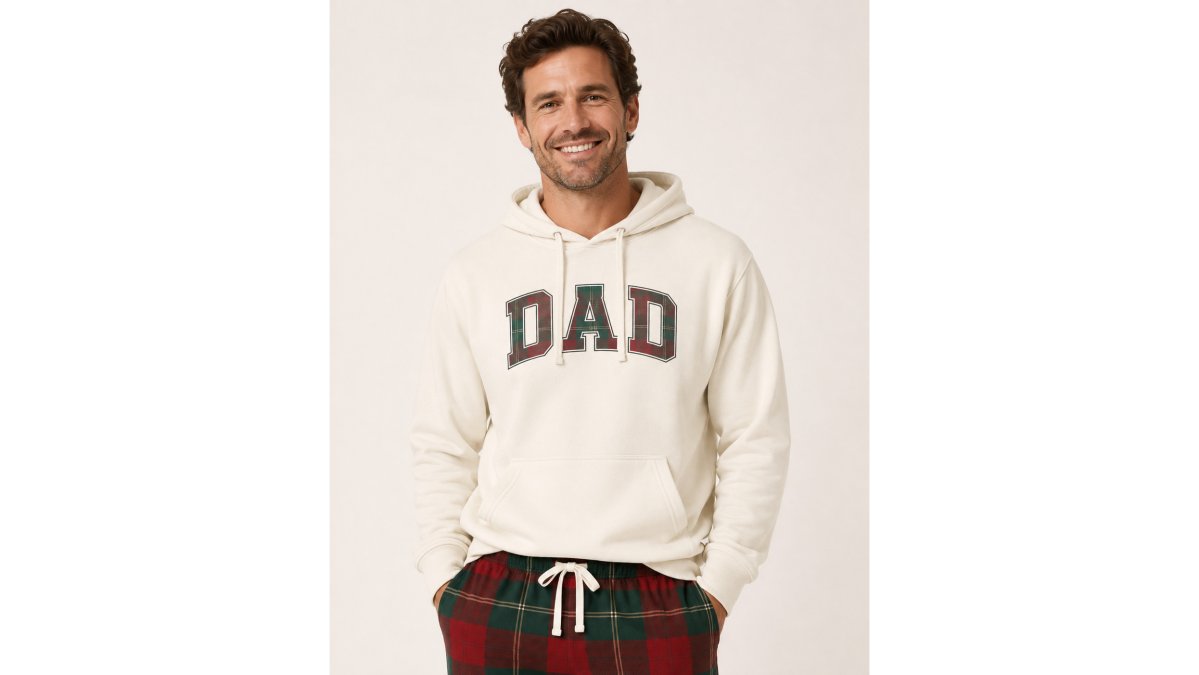
Coordinates builds family matching around one idea: clothes that get worn again and again, not just photographed once. The Legacy Plaid Sweatshirt is a 95% cotton, 5% spandex terry blend in warm cream with plaid-inspired MOM, DAD, GRANDMA, and GRANDPA embroidery, a kangaroo pocket, ribbed cuffs and hem, and cream drawcords with gold metal detailing.

Frequently Asked Questions
What is the 3-3-3 rule for clothes?
The 3-3-3 rule is a simple guideline for building a versatile wardrobe: three tops, three bottoms, and three pairs of shoes that all mix and match. For families, this means choosing pieces in a coordinated color palette so everyone can swap items. It reduces decision fatigue and ensures you get maximum wear from fewer items, which is a core principle of slow fashion and sustainable family matching outfits.
How can I coordinate sibling outfits without looking too matchy?
Focus on color palette coordination rather than identical pieces. Choose a base color like cream and let each child wear a different item in that shade, such as a plaid onesie for the baby and a solid hoodie for the older sibling. Adding a third accent color, like red or green, ties the looks together. This approach feels intentional and stylish, not forced, and works well for family photos.
What certifications should I look for in sustainable kids' clothing?
Look for GOTS (Global Organic Textile Standard) for organic cotton, OEKO-TEX Standard 100 for harmful substance testing, and Fair Trade Certified for ethical labor practices. These certifications verify claims about eco-friendly materials and supply chain transparency. They help you avoid greenwashing and ensure the fabrics are safe for sensitive baby skin. Always check the label or brand website for these seals.
How do I build a capsule wardrobe for my family?
Start by choosing a cohesive color palette, like neutral tones with one or two accents. Select 8-10 core pieces per person that can mix and match, such as jogger pants, hoodies, and onesies. Prioritize quality fabrics like organic cotton that hold up wash after wash. This reduces clutter and makes it easy to create coordinated family outfits without buying new items for every occasion.
Where can I buy clothes that isn't fast fashion?
Look for brands that prioritize ethical manufacturing, use sustainable materials like organic cotton, and offer timeless designs. Coordinates is one option, with family loungewear made from soft cotton blends and available in sizes from baby to adult. Other avenues include second-hand marketplaces, rental services, and upcycling existing garments. Always check for transparency about where and how items are made.
The hard part of family matching isn't finding a cute set. It's finding one that survives the season and still fits next year. Coordinates makes that easier with a coordinated Legacy plaid collection built from soft 95% cotton, 5% spandex blends, sizes running from baby through adult, and matching pieces for the dog. Shop the Coordinates collection and build a family look you'll actually wear more than once.



