

Posted by Editorial Team
on October 10, 2026

Table of Contents
- Why Material Choice Matters for Custom Team Gear
- Polyester vs. Cotton Team Uniforms: Which Lasts Longer
- Best Fabric for Custom Jerseys: Key Properties to Evaluate
- Breathable Fabric for Sports Uniforms: Mesh and Ventilation
- Sports Uniform Fabric Care: Extending Lifespan Through Proper Washing
- Matching Fabric to Sport and Activity Type
- Durability Testing and What to Look For When Ordering
- Frequently Asked Questions
Last Updated: October 10, 2026
Why Material Choice Matters for Custom Team Gear
The fabric you choose for custom team gear determines how long your uniforms will actually last.
Material choice affects three critical outcomes: performance during play, durability through washing and wear, and appearance season after season.
This guide walks you through the fabrics that actually perform, the properties that matter most, and how to match material choice to your specific use case.
Polyester vs. Cotton Team Uniforms: Which Lasts Longer
Polyester and cotton are two dominant fibers in apparel. They perform differently under various demands, and understanding those differences shapes every other decision you'll make about choosing durable materials for your apparel.
Polyester Performance and Durability
Polyester is a workhorse fiber in many types of apparel. Here's what makes it stand out:
- Abrasion resistance: Polyester fibers are naturally smooth and strong, so they don't break down from contact or friction as quickly as cotton
- Color retention: Synthetic dyes bond tightly to polyester, so logos and team colors stay vibrant through dozens of wash cycles
- Quick-drying: Polyester doesn't absorb water the way cotton does, so uniforms dry faster and don't stay damp against skin
- Minimal shrinkage: Polyester doesn't shrink in the wash, so sizing stays consistent across the season
The trade-off is breathability. Pure polyester traps moisture, which is why most performance fabrics blend polyester with other fibers to improve airflow.
Cotton Comfort and Limitations
Cotton feels soft and breathes naturally, but it has real limits for activewear. Cotton absorbs moisture instead of wicking it away, shrinks in warm water, stretches over time, and shows pilling after repeated wear. Its weaker fibers mean seams and high-stress areas wear through faster.
For casual loungewear or light activity, cotton works fine. For anything involving contact, sweat, or repeated washing, cotton may underperform.
Blended Fabrics: The Middle Ground
Many durable apparel items blend polyester with cotton or other fibers. A 65% polyester / 35% cotton blend captures polyester's durability and quick-drying while adding softness.
Best Fabric for Custom Jerseys: Key Properties to Evaluate
Choosing durable materials for apparel means evaluating specific fabric properties beyond just fiber content. These properties determine real-world performance.
Moisture-Wicking and Quick-Drying Performance
Moisture-wicking fabrics pull sweat away from skin to the surface, where it evaporates. Polyester naturally wicks moisture better than cotton through engineered textures. Look for fabrics labeled "moisture-wicking" or "quick-dry." This matters because wearers stay comfortable, garments dry faster, and moisture doesn't linger to promote odor or mildew. Cotton absorbs water instead of wicking it, so cotton-heavy blends may underperform here.
Abrasion Resistance and Contact Sport Durability
Abrasion resistance measures how well a fabric withstands friction. In high-contact activities, weak fabrics pill, fray, and tear. Polyester and nylon resist abrasion far better than cotton. High-quality apparel uses tighter weaves and heavier-weight fabrics in high-stress areas, shoulders, sleeves, and side seams, where contact happens most.
Fabric Weight and Construction Details
Fabric weight (measured in ounces per square yard) directly affects durability. Lightweight (4-5 oz) suits endurance activities; midweight (5-6 oz) balances most activewear; heavyweight (6+ oz) suits high-contact activities. Construction details also matter: double-stitched seams last longer than single stitches, reinforced neck and armhole seams prevent stretching and tearing, and flat-felled seams are stronger than overlocked seams.
Breathable Fabric for Sports Uniforms: Mesh and Ventilation
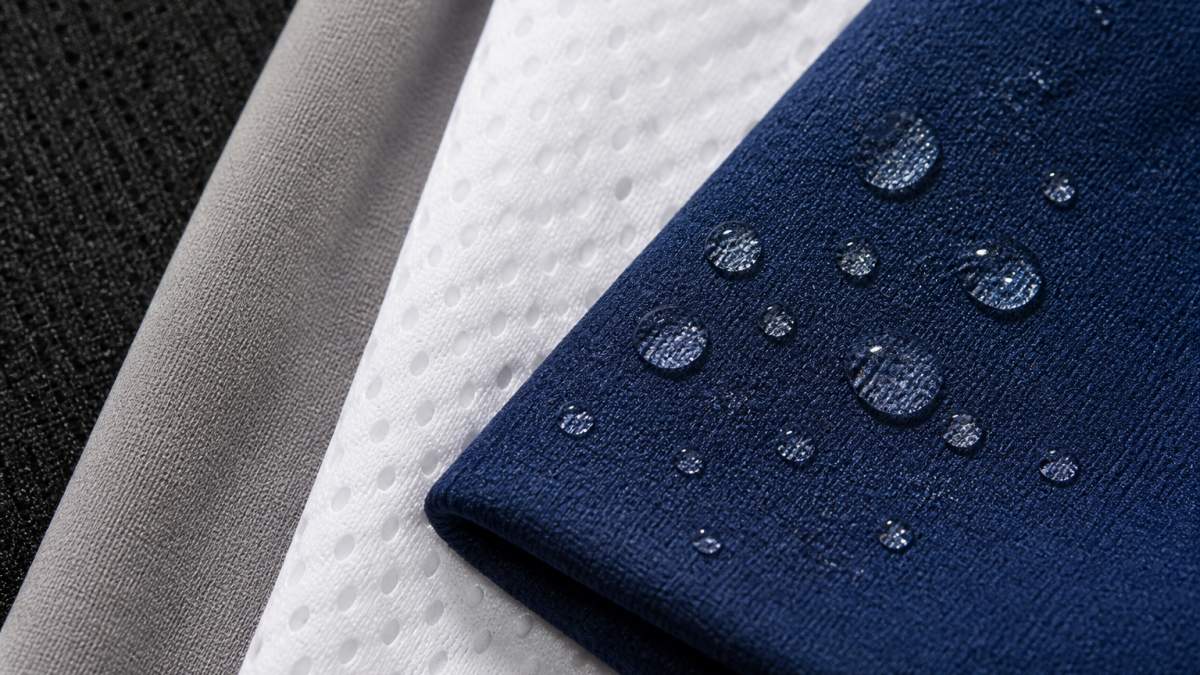
Mesh fabrics use an open weave to create airflow and cool the wearer. Mesh dries quickly because water passes through instead of being absorbed. However, mesh is less durable than solid fabric and can snag or tear more easily. Many durable apparel items use mesh strategically in low-impact areas, underarms, sides, back, rather than throughout.
Sports Uniform Fabric Care: Extending Lifespan Through Proper Washing
How you wash your apparel matters as much as what it's made from. Proper care extends lifespan significantly.
Laundering Best Practices
Washing practices that protect fabric include:
- Use cold water: Hot water breaks down synthetic dyes and weakens polyester fibers over time
- Turn jerseys inside out: This protects printed logos and reduces pilling on the outer surface
- Use mild detergent: Heavy detergents can damage synthetic fibers and fade colors
- Wash with similar colors: Dyes can bleed, especially in the first few washes
- Avoid fabric softener: Softener coats fibers and reduces moisture-wicking performance
- Air dry when possible: High heat in dryers weakens polyester and can melt synthetic blends
- Wash less frequently: Fewer wash cycles means longer lifespan
Most apparel can handle machine washing on a gentle cycle in cold water. Hang-drying or low-heat drying extends lifespan compared to high-heat dryer cycles.
Avoiding Common Damage and Wear
Common mistakes that shorten uniform lifespan:
- Washing in hot water: Accelerates color fading and fiber breakdown
- Using bleach: Damages synthetic dyes and weakens fibers
- Overdrying: High heat damages polyester and causes shrinkage
- Washing with heavy items: Zippers and rough fabrics snag delicate jersey material
- Ignoring stains immediately: Stains set in the wash and become permanent
- Storing in damp conditions: Mildew and odor develop in moist storage
Treating stains before washing and storing apparel in a cool, dry place also extends lifespan.
Matching Fabric to Sport and Activity Type
The best fabric for your apparel depends on the demands of its use. But fabric choice alone doesn't determine durability, construction details like seams, reinforcements, and panel placement matter equally. A lightweight fabric with reinforced seams can outlast heavy fabric with single stitches.
High-Contact Sports: Football, Basketball, and Wrestling
High-contact activities demand maximum abrasion resistance and seam durability. Use 6+ oz weight, 100% polyester or polyester-nylon blends (70%+ polyester), tight weaves, and smooth finishes. Construction should include double-stitched or reinforced flat-felled seams in all stress areas, reinforced neck and armhole binding, and minimal mesh. For example, some activewear uses 100% polyester with reinforced seams throughout; others use polyester-nylon blends; and some prioritize grip and durability with heavy polyester and reinforced seams.
Endurance Sports: Running, Soccer, and Cycling
Endurance activities prioritize breathability and moisture management. Use 4-5 oz weight, polyester or polyester-cotton blends (60%+ polyester), looser weaves, and moisture-wicking finishes. Construction should include double-stitched seams in stress areas, strategic mesh panels in high-heat areas, and raglan or drop-shoulder sleeves. For example, some activewear uses lightweight polyester with mesh side panels; others prioritize mesh and moisture-wicking; and some use strategic mesh with reinforced seams at friction points.
Youth Uniforms and Seasonal Considerations
Youth apparel must balance durability with comfort and accommodate growth. Oversized garments experience more movement and stress, so seam construction is critical. Use double-stitched seams throughout, reinforced neck and armhole binding, reinforced hems, and 5-6 oz weight to balance durability with comfort.
Seasonal Considerations:
Summer: Lightweight (4-5 oz), high-breathability with mesh in underarms and back; solid fabric in front and shoulders. Winter: Heavier (6-7 oz) with reinforced seams throughout; avoid excessive mesh. Indoor: Standard construction with reinforced seams; mesh optional. Outdoor: Use UV and water resistance with reinforced seams and tight weaves; avoid excessive mesh.
Construction Details That Extend Lifespan
Beyond fiber and weight, these construction choices directly affect how long uniforms last:
Seam Type:
- Single-stitch: Fastest to produce, least durable. Acceptable only for low-stress areas or casual wear.
- Double-stitch: Standard for quality uniforms. Provides redundancy if one stitch line fails.
- Flat-felled seam: Fabric is folded and stitched flat, creating a strong, finished seam. More durable than overlocked seams but more expensive.
- Reinforced seams: Extra stitching in high-stress areas (shoulders, armholes, side seams) extends lifespan significantly.
Panel Construction:
- Fewer panels: Fewer seams means fewer failure points. A simple two-panel back is more durable than a multi-panel design.
- Strategic reinforcement: Extra fabric or stitching in high-stress areas (shoulders, underarms) protects against wear without adding bulk.
- Gusseted underarms: An extra fabric triangle under the arm reduces armhole stress and improves durability.
Binding and Hems:
- Reinforced binding: Neck, armhole, and hem binding that's stitched multiple times lasts longer than single-stitched binding.
- Flat hems: Flat-stitched hems are more durable than rolled hems, which can unravel.
- Tape reinforcement: Bias tape or reinforcement tape in high-stress areas (neck, armholes) prevents stretching and tearing.
Customization Compatibility:
- Screen printing: Works well on tight-weave, smooth fabrics. Loose or textured fabrics can cause ink to crack or peel.
- Heat transfer: Requires stable fabric that won't shrink or shift. Polyester blends are ideal; pure cotton can be problematic.
- Embroidery: Requires stable fabric with enough weight to support thread. Lightweight mesh is not suitable for embroidery.
When choosing durable materials for apparel, evaluate both fabric and construction. A midweight polyester with reinforced seams will outlast a heavier fabric with single stitches. Ask your supplier about construction details, not just fiber content.
Durability Testing and What to Look For When Ordering
When ordering apparel, durability is measurable. Quality manufacturers test fabrics against standardized wear scenarios and can provide results, helping you compare materials objectively.
Standard Durability Tests and What They Measure
Abrasion Resistance (ASTM D4157 / D4158) measures how many cycles (rubs) fabric survives before visible wear occurs.
Seam Strength (ASTM D6775) measures how much force a seam withstands before splitting.
Colorfastness (ASTM D2261 / D2262) measures dye resistance to fading.
Shrinkage Testing (ASTM D2261) measures dimensional change. Acceptable shrinkage is less than 3%; good performance is less than 2%; excellent is less than 1%.
Questions to Ask Your Supplier
When ordering apparel, request: (1) test results for abrasion, seam strength, and colorfastness; (2) exact fiber percentages and types, not vague "polyester blend"; (3) fabric weight in ounces per square yard; (4) seam construction details (single, double, or reinforced; flat-felled seams; reinforced binding); (5) how your chosen decoration method will hold up through washing and wear; (6) care instructions specific to your fabric blend.
Red Flags When Ordering
If a supplier cannot or will not provide test data, that's a warning sign. Watch for vague fiber descriptions, no seam reinforcement in high-stress areas, lightweight fabric (under 5 oz) for high-contact activities, unwillingness to discuss care and lifespan, and unusually low pricing without explanation. The cheapest option rarely offers the best value.
Frequently Asked Questions
What fabric is best for custom team uniforms that need to last through a full season?
Performance polyester or polyester blends outperform pure cotton for durability. Polyester resists abrasion, maintains shape after repeated washing, and handles the stress of contact sports better than cotton. Look for heavy-duty polyester (at least 200 GSM fabric weight) with reinforced seams and a tight weave. Blends combining polyester with spandex add stretch and flexibility without sacrificing durability, making them ideal for uniforms that experience physical wear.
How do polyester vs. cotton team uniforms compare in terms of performance and care?
Polyester dries faster, resists shrinking, and holds color better after multiple washes than cotton. Cotton feels softer initially but absorbs moisture, takes longer to dry, and can shrink or fade with heat. For team uniforms subject to sweat and frequent laundering, polyester wins on durability. Cotton requires careful washing to prevent damage. Many teams choose polyester blends to balance comfort with performance, gaining moisture-wicking from polyester while maintaining some breathability.
What should I look for in breathable fabric for sports uniforms?
Mesh panels or open-weave construction improve airflow and allow sweat to evaporate quickly. Polyester mesh offers both breathability and durability, making it popular for high-performance uniforms. Check for moisture-wicking properties, which pull sweat away from skin. Fabric weight matters too, lighter fabrics (under 150 GSM) breathe better but may wear faster in contact sports. For youth uniforms or hot-weather sports, prioritize ventilation; for cold-weather or contact sports, balance breathability with durability using heavier blends.
How can proper sports uniform fabric care extend the lifespan of team gear?
Wash uniforms in cold water with mild detergent to prevent color fading and fabric breakdown. Avoid high heat in the dryer, which weakens polyester fibers and can cause shrinking. Turn jerseys inside out before washing to reduce pilling and protect printed logos. Air dry when possible to maximize lifespan. Separate uniforms from items with zippers or rough textures that cause abrasion. Regular, gentle care prevents premature wear far more effectively than occasional deep cleaning, and uniforms typically last 2-3 seasons with proper handling.
Choosing the right fabric for your team's uniforms means balancing durability, comfort, and performance. The best choice depends on your sport, climate, and how often uniforms get washed. At Coordinates, we help teams and families find apparel that combines quality construction with fabrics built to last. Shop our collection of durable team gear designed with performance and comfort in mind.



