

Posted by Editorial Team
on October 08, 2026

Table of Contents
- Start Here: How to Wash 100% Cotton Pajamas and Loungewear
- How Often to Wash Pajamas and Printed Cotton Loungewear
- How to Prevent Printed Clothes From Fading, Cracking, and Transfer
- How to Dry Cotton Clothes Without Shrinking
- Stain Removal and Spot Treatment for Printed Cotton Loungewear
- Storage and Care Between Wears
- Common Mistakes That Damage Printed Cotton
- Conclusion: Keep Your Printed Cotton Loungewear Soft and Bright
- Frequently Asked Questions
Last Updated: October 9, 2026
Start Here: How to Wash 100% Cotton Pajamas and Loungewear
Printed cotton is cotton fabric with a design applied to the surface rather than woven into it. That difference matters, because the print sits on top of the fabric.
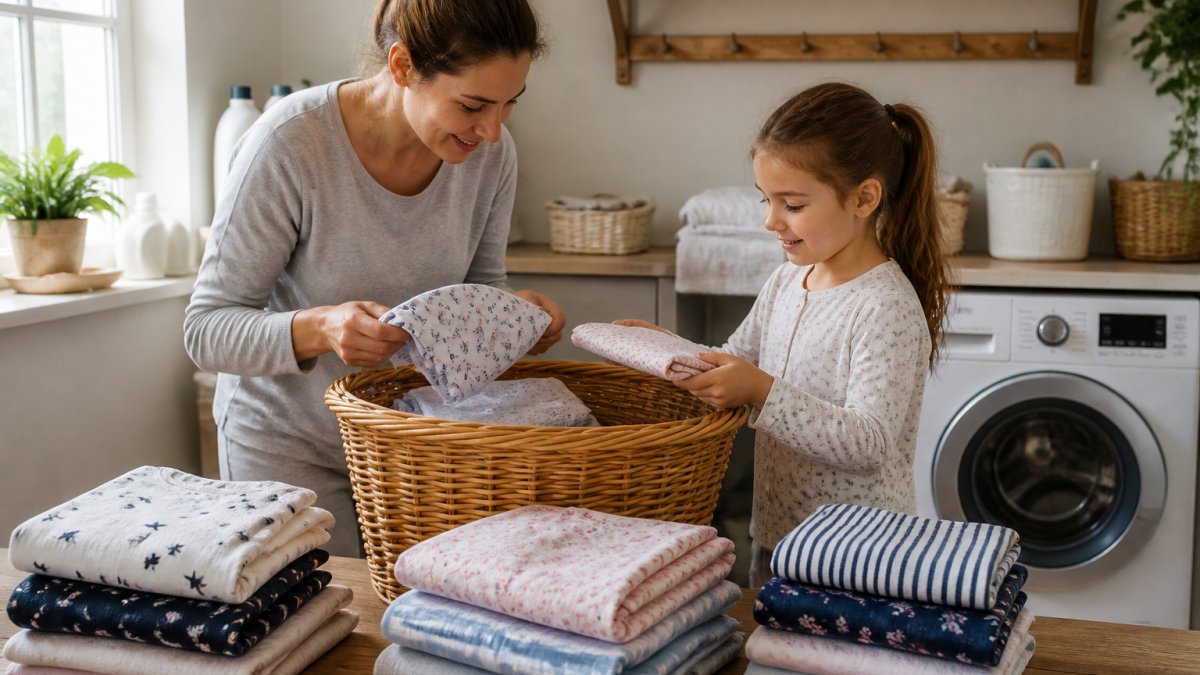
At Coordinates, we make our loungewear from soft cotton knits, and we hear the same question from families all the time: how do you keep a favorite print looking new?
Turn garments inside out before washing
Flipping each piece inside out is the single easiest way to protect a print. The friction of the wash cycle hits the plain inner surface instead of the design. Zippers, buttons, and even other clothes then rub against cotton, not ink. Do this every single time, not just for the first wash.
Choose cold water and a gentle cycle
Cold water keeps colors from bleeding and stops the cotton fibers from shrinking. Set your machine to a gentle or delicate cycle with a low spin speed. Use a mild detergent, and skip fabric softener, which leaves a coating that dulls prints over time.
For more on fabric care basics, the American Cleaning Institute's laundry guidance is a solid reference.
How Often to Wash Pajamas and Printed Cotton Loungewear
Pajamas worn next to the skin should be washed after two to three wears. Loungewear worn over other layers can go longer, usually after three to four wears.
Here's a simple schedule to follow:
| Garment | Wash after | Why |
|---|---|---|
| Pajama tops and bottoms | 2-3 wears | Direct skin contact, sweat, oils |
| Nighties and robes | 3-4 wears | Lighter contact, worn briefly |
| Joggers and lounge pants | 3-4 wears | Often worn over other layers |
| Kids' sets | 1-2 wears | Spills, play, and messes |
The exact timing matters less than consistency. Washing too rarely lets body oils set into the print and weaken it. Washing too often wears down even the best cotton knit.

Pro Tip
Wash new printed cotton pieces once before the first wear. It removes any finishing residue and helps the print settle, so it holds up better from day one.
How to Prevent Printed Clothes From Fading, Cracking, and Transfer
Fading, cracking, and transfer all come from the same root cause: heat and friction. Keep both low and your prints will last. The most common mistake is washing prints in hot water or tossing them in a hot dryer. A hot dryer is the fastest way to crack a screen print.
Read the care label and identify the print method
Check the label first. Most cotton loungewear is machine washable, but the print method decides how careful you need to be.
- Screen print: Thicker ink sits on top of the fabric. It can crack if stretched or heated.
- Digital or DTG print: Softer and thinner. It fades gently rather than cracking.
- Sublimation: The design bonds with the fabric. This is the most durable type.
If you are unsure which method your garment uses, treat it like a screen print.
Labels also carry care symbols worth knowing. The Federal Trade Commission's guide to care labels explains what each symbol means.
How to Dry Cotton Clothes Without Shrinking
The safest way to dry cotton without shrinking it is to air dry. Heat is what causes cotton to shrink, so line drying or laying pieces flat avoids the problem entirely.
To air dry printed cotton loungewear:
- Gently reshape each piece while damp.
- Lay knits flat on a clean towel to keep their shape.
- Hang woven items on a line or drying rack.
- Keep everything out of direct sunlight, which can fade prints.
- Let pieces finish drying fully before folding.
Hanging a heavy wet knit can stretch it out of shape. Flat drying is safer for cotton knits, especially joggers and relaxed fit pants.

Stain Removal and Spot Treatment for Printed Cotton Loungewear
Stain removal on printed cotton is a two-front problem: you are fighting the stain without lifting the ink. Most generic stain advice assumes a plain white tee, where the only risk is setting the stain. On a printed piece, an aggressive treatment can also dull, crack, or smear the design. The rule is simple, treat the stain, not the print.
Why printed cotton behaves differently
On a screen print, the ink sits as a raised layer on top of the cotton. On a digital or DTG print, the ink soaks into the fiber surface and is thinner. Both react badly to the same things: heat, bleach, and mechanical scrubbing. Heat sets stains and can also soften and distort the ink layer.
The print-safe spot treatment routine
Work from the inside out so you push the stain off the fabric rather than through it:
- Blot, do not rub, the spill with a clean white cloth or paper towel. Rubbing spreads the stain and drives it into the weave.
- Flush the back of the stain with cold running water. Cold keeps proteins and dyes from setting.
- Apply a small amount of mild liquid detergent directly to the stain, not the print.
- Let it sit 10 to 15 minutes. Do not let it dry on the fabric.
- Rinse with cold water and check before drying. If any stain remains, repeat once.
- Air dry. Heat from a dryer will set whatever is left.
Stain-by-stain guidance
Different stains need different chemistry, and the wrong one can damage the print:
Team USA Plaid Shorts (Women's) →
- Greasy food, oil, lotion: A drop of grease-cutting dish soap on the spot, worked in gently with fingertips, then rinsed cold. Dish soap is formulated for fats and is gentler on ink than a solvent.
- Ink, marker, grass: A small amount of rubbing alcohol on a white cloth, dabbed, never poured, onto the stain. Test on an inside seam first, because alcohol can lift some digital inks.
- Blood, egg, dairy: Cold water only. Warm or hot water coagulates proteins and locks the stain in permanently.
What never to use on a print
- Chlorine bleach. It strips color from both the cotton and the design and can leave permanent light spots.
- Oxygen bleach on a screen print. It is safer than chlorine but can still fade some inks over repeated use. Spot-test first.
- Hot water or a hot iron on a fresh stain. Heat sets the stain and can crack the print in one pass.
Pro Tip
Keep a small spray bottle of cold water and a bar of mild soap near the laundry area. Treating a stain within the first hour, before it sets, is the single biggest factor in whether it comes out at all.
If a stain has already dried and set, do not reach for bleach. Soak the piece in cold water with a scoop of oxygen-based cleaner for 30 minutes, then launder as usual. Repeat the soak rather than increasing the strength of the treatment.
When to stop and accept the mark
Some stains, set-in ink, rust, or dye transfer from a darker garment, will not come out without damaging the print. If two gentle attempts fail, stop. A faint mark on a soft, intact print looks better than a bleached halo or a cracked design. Reserve the aggressive treatments for unprinted whites, and keep the printed pieces on the gentle routine.
Storage and Care Between Wears
How you store printed cotton between washes affects the print as much as how you wash it. Two forces do the damage: light and moisture. Ultraviolet light fades dye over months, and trapped moisture feeds mildew and can transfer dye from one garment to another. Storage is where you control both.
Air before you fold
A worn piece carries body moisture and skin oils. Folding it straight into a drawer traps that moisture against the fabric and, over time, against the print. Hang the piece on a hook or the back of a chair for a few hours, overnight is ideal, before it goes back in the drawer.
Fold knits, hang wovens
Cotton knits, joggers, relaxed-fit pants, tees, stretch when hung wet or heavy. Fold them. Wovens like robes and button-front pieces hold their shape better on a hanger. If you hang a knit, use a padded hanger and support the shoulders so the weight does not pull the garment out of shape.
Keep prints out of direct light
A drawer or a closed closet protects prints from the UV that fades dye. If a shelf is exposed to a window, rotate the pieces or store them in a breathable cotton bag. Plastic bins and vacuum bags trap moisture and can cause mildew and dye transfer, avoid them for anything you plan to wear again soon.
Separate by color and by print
Dark prints and light cottons should not share a drawer if either is damp. Dye transfer happens most often between a new, dark, unwashed piece and a light one. Wash new dark prints once before storing them next to lighter pieces, and keep whites in their own drawer or shelf.
A simple between-wear routine
- Air the piece for a few hours.
- Spot-check for stains or deodorant buildup before folding.
- Fold knits; hang wovens.
- Store in a cool, dry, dark place.
- Rotate seasonal pieces so nothing sits in light for months.
Storage is not passive. Light fades prints, moisture grows mildew, and damp dark fabrics bleed dye onto lighter ones. Airing, folding, and keeping pieces in a cool dark drawer is the cheapest way to make a print last.
Seasonal storage
For pieces you will not wear for months, wash them first, body oils and invisible stains attract pests and set over time. Store folded in a breathable cotton bag or a clean pillowcase, not plastic. Add a cedar block or lavender sachet for freshness, but keep mothballs away from cotton you plan to wear against your skin.
Common Mistakes That Damage Printed Cotton
Most damage comes from a handful of easy-to-avoid habits. Here are the ones we see most:
- Using hot water or a hot dryer. Heat shrinks cotton and cracks prints.
- Washing prints with towels or jeans. Rough fabrics rub the design away.
- Overloading the machine. Crowded loads mean more friction and less cleaning.
Skipping the inside-out step is the most common cause of faded prints. The design takes the full beating of the wash cycle, and it shows within a few washes.
Conclusion: Keep Your Printed Cotton Loungewear Soft and Bright
A little care goes a long way. Cold water, a gentle cycle, and air drying will keep any printed cotton piece looking new.
That is the approach we take at Coordinates. Our Team USA Plaid Shorts, Relaxed Fit Pants, Kids' Sets, and Men's Joggers are all made from soft cotton knits built to hold up wash after wash.

OEKO-TEX STANDARD 100 textile safety standard
Frequently Asked Questions
How many times can you wear pajamas before washing them?
Most people can wear cotton pajamas two to three times before washing if they shower before bed and don't sweat heavily. If you wear them all day as loungewear, wash after one or two wears. Kids' pajamas usually need washing more often, sometimes after every wear, especially if they eat breakfast in them or play outside. When in doubt, wash. A gentle cold cycle keeps printed cotton looking new without wearing out the fabric.
Should you wash printed cotton clothes inside out?
Yes. Turning printed cotton loungewear inside out before washing protects the print from rubbing against other garments and the drum. This simple step prevents cracking, fading, and print transfer. It also helps the fabric surface stay smooth. Pair it with cold water and a gentle cycle, and your printed cotton pieces will hold their color and design much longer.
What water temperature is best for washing printed cotton loungewear?
Cold water is best. Heat breaks down the binders that hold prints to cotton fabric, causing colors to fade and designs to crack. Cold water also reduces shrinking and saves energy. Use a mild detergent and skip fabric softener, which can leave a coating that dulls prints. If you must use warm water for a stubborn stain, keep it below 86°F and only for that load.
Can you put printed cotton loungewear in the dryer?
You can, but low heat or air-dry is safer. High heat shrinks cotton and speeds up print fading and cracking. If you use a dryer, choose the lowest heat setting and remove items while slightly damp. Hang or lay flat to finish drying. For 100% cotton knits, air-drying preserves fit and softness best. Always check the care label first.
Good loungewear should feel soft, fit well, and last. When you find pieces the whole family loves, you want them to stay that way. Coordinates makes cotton knit sets for men, women, kids, and babies, with options like our Team USA Plaid collection and University of Texas gear. Get started with Coordinates and keep your family cozy in prints that stay bright.



