

Posted by Editorial Team
on October 30, 2026

Last Updated: October 30, 2026
Quick Summary
The best baby eczema detergent is a fragrance-free, dye-free formula with a short ingredient list and no added softeners, dosed to the water line with an extra rinse every wash. Choose fragrance-free over unscented, since unscented products may still contain masking perfumes that irritate a baby's compromised skin barrier.
- Fragrance-free means no scent added, while unscented may contain masking fragrance compounds.
- Dose detergent to the water line, not the cap rim, to avoid residue on fabric.
- Run the extra rinse cycle every time, especially on new baby clothes.
- Skip fabric softeners and dryer sheets entirely, as they trap residue and perfume against skin.
- Powder is the lowest cost per load, liquid is moderate, and laundry sheets are highest.
Table of Contents
- Why Detergent Choice Matters for Baby Eczema
- How to Pick the Best Detergent for Sensitive Skin
- Laundry Detergent Ingredients to Avoid for Eczema
- How to Wash Baby Clothes With Eczema-Prone Skin
- Why the Extra Rinse Cycle for Baby Clothes Is Worth It
- Comparing Detergent Formats and Cost Per Load
- Choosing Skin-Friendly Loungewear for Eczema-Prone Babies
- Frequently Asked Questions
Why Detergent Choice Matters for Baby Eczema
A baby's skin is thinner and loses moisture faster than an adult's, which is why baby eczema detergent residue left in fabric can trigger redness and itching in infants prone to flare-ups. Choosing the best laundry detergents for baby eczema means picking a formula that rinses clean and skips known irritants.
Here's the part most guides gloss over: detergent is not a treatment for eczema. It is a lever you control. A gentle formula removes the soap film, dye residue and perfume oils that aggravate sensitive skin, but it won't cure a flare. That distinction matters, and it shapes every recommendation below.
Below, we'll show you exactly how to read a label, choose a format, and build a washing routine that gives a reactive baby's skin the best chance to settle. The guidance here follows what dermatologists and the National Eczema Association generally advise about irritants in laundry products.
How to Pick the Best Detergent for Sensitive Skin
The best detergent for sensitive skin is a fragrance-free, dye-free formula with a short ingredient list and no added softeners. Start there, then adjust for water hardness and washing machine type. Three checks do most of the work:
- Fragrance-free over "unscented." These are not the same claim, and the difference matters for a reactive baby.
- Free and clear formulas. These usually skip dyes and masking perfumes, though you still need to read the panel.
- Liquid over powder for cool washes. Powder can leave grit in cold water, and grit means residue against skin.
Fragrance-Free vs. Unscented: What the Labels Actually Mean
Fragrance-free means no scent has been added at all. Unscented can mean a product contains a masking fragrance to neutralize the smell of raw ingredients, so an unscented detergent may still carry perfume compounds. For a baby with eczema-prone skin, fragrance-free is the safer default. If a label says "unscented" but lists "fragrance" or "perfume" in the ingredients, treat it as scented and put it back on the shelf.
Liquid, Powder, or Laundry Sheets: Format Trade-offs
Liquid detergent dissolves well in cold water and lets you control the dose precisely, which suits most households with a baby. Powder works hard on stains and often costs less per load, but it needs warm water to dissolve fully. Laundry sheets are convenient and mess-free, though some parents find they leave more residue on thick fabrics like fleece. Readers weighing formats may also want to explore the benefits of bamboo fabric for family loungewear.
Laundry Detergent Ingredients to Avoid for Eczema
Most ingredient lists on sensitive-skin detergents are shorter for a reason: fewer compounds means fewer chances for a reactive baby's skin to meet a trigger.
Fragrance and perfume. This is the ingredient with the strongest consensus behind it. The American Academy of Dermatology identifies fragrance as one of the most common causes of allergic contact dermatitis, and fragrance mixes are routinely included in patch-test panels.
Dyes and colorants. Dyes are added for appearance, not cleaning, and they stay on fabric after the wash. They are a well-recognized irritant and a common reason parents switch to a free-and-clear formula.
Optical brighteners. These are fluorescent compounds that absorb UV light and re-emit it as visible blue light, making fabric look whiter. They are designed to remain on the fabric, which means they sit against skin all day.
Enzymes. Proteases, amylases, and lipases break down stains effectively, and they are not inherently bad. The caveat is residue: enzymes left in fabric can irritate broken skin, and some sensitive individuals react.
Fabric softeners and dryer sheets. These coat fibers with a waxy film that traps detergent residue and perfume against the skin. They are the single easiest category to skip entirely for a baby with eczema-prone skin, and skipping them costs nothing in cleaning performance.
Preservatives. Less discussed but worth knowing: liquid detergents need preservatives to stay stable, and some (such as methylisothiazolinone) are recognized contact allergens. Powder and sheet formats often use fewer preservatives because they are dry.
Watch Out
"Natural" and "plant-based" do not mean non-irritating. Essential oils are natural fragrance, and some, lavender and citrus among them, are recognized contact allergens. A plant-derived formula that lists "fragrance (essential oil blend)" is still a scented product. Read the panel, not the front label.
Finally, individual triggers vary. A detergent that works for one baby may not work for another, and the only reliable test is a patch trial on a small load of clothing. Dermatology guidance is a starting filter, not a guarantee.
How to Wash Baby Clothes With Eczema-Prone Skin
Wash baby clothes with eczema-prone skin in a fragrance-free, dye-free detergent, use the smallest effective dose, and always run an extra rinse. That combination removes soil without leaving a film behind. Here is the routine we'd follow:
- Pre-treat stains with a fragrance-free spot treatment rather than pouring extra detergent.
- Dose to the water line, not the cap rim. More detergent means more residue, not cleaner clothes.
- Choose a warm wash for bedding and a cool wash for everyday onesies.
- Run the extra rinse cycle every time, especially on new clothes.
- Skip fabric softener and dryer sheets entirely.
- Wash new items before the first wear to remove manufacturing finishes.
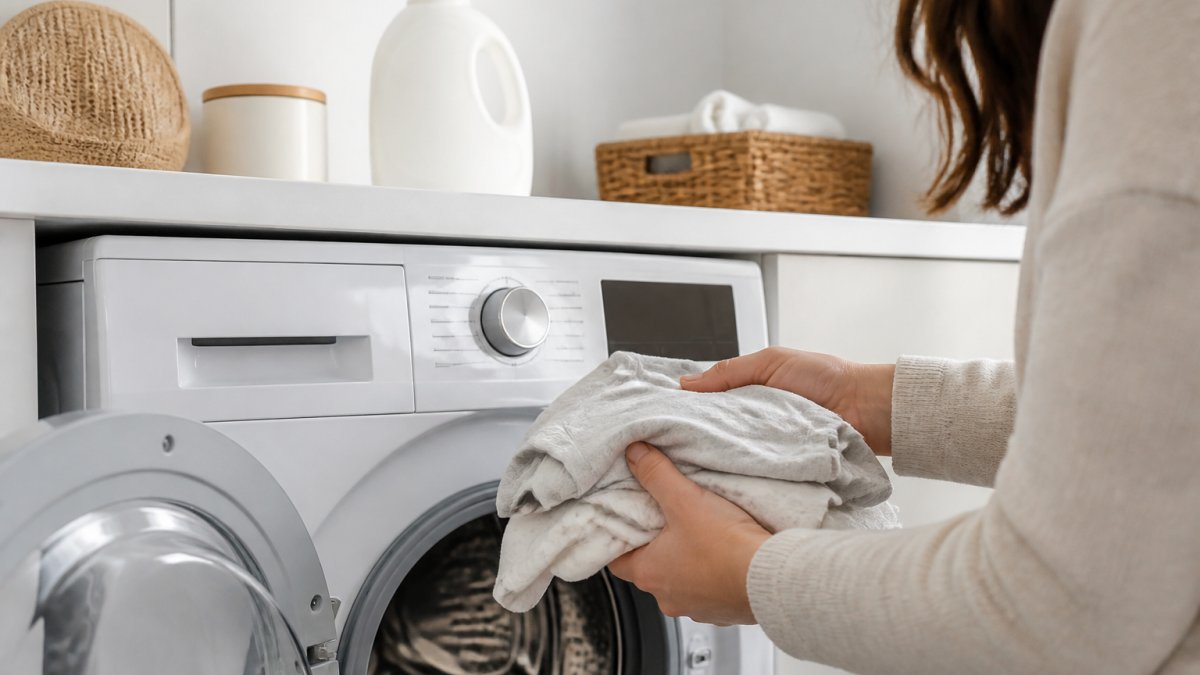
Watch out: overfilling the drum is the mistake we see most. Crammed laundry can't rinse properly, and trapped detergent is exactly what you're trying to avoid.
Why the Extra Rinse Cycle for Baby Clothes Is Worth It
The extra rinse cycle for baby clothes is worth it because it flushes out baby eczema detergent the main wash leaves behind. Most machines use a set water volume, and thick fabrics like terry and fleece hold onto suds. One additional rinse costs a few gallons of water and a few minutes, and it's the single easiest change a parent can make. If your machine has a "skin sensitive" or "extra rinse" setting, use it as your default for anything that touches a baby's skin, including baby bedding and towels.
Comparing Detergent Formats and Cost Per Load
Format choice affects cleaning, residue, and value, but the sticker price on the bottle is a poor guide to what you actually spend. The number that matters is cost per load, and it depends on concentration and the dose you use, not the size of the jug.
Here is how the three main formats compare on the factors that matter for a baby with eczema-prone skin.
| Format | Best For | Watch Out For | Cost Per Load |
|---|---|---|---|
| Liquid, free and clear | Most households, cold washes, precise dosing | Overdosing from the cap; preservatives needed for stability | Moderate |
| Powder | Stains, hard water, budget | Grit in cold water; less convenient to dose | Lowest |
| Laundry sheets | Travel, small loads, convenience, no preservatives | Residue on thick fabrics; limited dose flexibility | Highest |
Why concentration drives value. A concentrated liquid may cost more per bottle but deliver more loads per ounce, so the per-load figure can be lower than a cheaper, dilute product. The reverse is also true: a budget powder dosed correctly often beats a premium liquid on cost per load. The trap is overdosing.
HE-machine compatibility. High-efficiency machines use less water, which makes low-sudsing formulas important. Most modern free-and-clear liquids and powders are HE-compatible, but check the label, a non-HE powder in an HE machine can leave residue and strain the machine. Laundry sheets are generally HE-safe because they dissolve fully.
Hard water. In hard water, powder detergents often perform better because they can include water softeners that liquid formulas may lack. If you have hard water and notice residue or dull fabrics, a powder designed for hard water is worth trying before switching to a more expensive liquid.
Cloth diapers and shared family laundry. For cloth diapers, look for a detergent that rinses clean and skips fabric softeners and brighteners; many parents use a free-and-clear liquid or a simple powder.
Pro Tip
To estimate cost per load, divide the product price by the number of loads the label claims, then adjust for the dose you actually use. If you use half the recommended cap for baby loads, your real cost per load is roughly half the label figure.
A budget-friendly powder with a short ingredient list can outperform a costly liquid if you dose it correctly. Sustainable formats like sheets cut plastic and skip preservatives, but check that they are fragrance-free before you commit.
Choosing Skin-Friendly Loungewear for Eczema-Prone Babies
Fabric choice matters as much as detergent. For guidance on picking soft, eczema-friendly fabrics for baby clothes, see Best Soft Fabrics for Baby Clothes: A Parent's Guide. Look for smooth, breathable fibers, loose fits that don't rub, and seams that sit flat against the skin. Parents of newborns can find natural fabric guidance for sleepwear that won't irritate skin. Cotton and bamboo blends tend to feel gentle, while rough wool and heavy synthetics can scratch. Readers seeking eczema-friendly options can explore soft holiday loungewear for sensitive skin.
At Coordinates, our family loungewear is designed with comfort in mind, with sizes that include baby, kids, and adult options. When a flare does appear, check with your pediatrician or a dermatologist before changing products, since detergent is one piece of eczema management, not the whole picture.
Frequently Asked Questions
What laundry detergent is best for babies with eczema?
There is no single best baby eczema detergent, but the safest starting point is a fragrance-free, dye-free formula labeled for sensitive skin. Look for short ingredient lists and avoid added perfumes, dyes, and fabric softeners. Many parents find free-and-clear liquid or powder detergents work well. Wash baby clothes separately, use the recommended dose, and run an extra rinse to remove residue. If eczema flares continue despite these changes, talk to your pediatrician or dermatologist about whether detergent is a trigger.
Should I use fragrance-free or unscented detergent for baby eczema?
Choose fragrance-free whenever possible. Unscented products may still contain masking fragrances that neutralize a chemical smell without removing the irritant. Fragrance-free means no fragrance has been added at all, which is the safer choice for eczema-prone skin. Check the ingredient list for the words fragrance or parfum, and look for a label that explicitly says fragrance-free. This one change often reduces skin irritation from laundry residue.
Can laundry detergent make a baby's eczema worse?
Yes. Detergent residue left in fabric can irritate sensitive skin and contribute to contact dermatitis, which may worsen eczema symptoms. Common culprits include fragrance, dyes, and harsh surfactants that stay in the fabric after washing. Using a gentle formula, skipping fabric softener, and adding an extra rinse cycle for baby clothes helps reduce residue. Detergent is not a treatment for eczema, so keep using any prescribed skincare routine and consult a doctor if symptoms persist.
Is baby detergent necessary for babies with eczema?
A dedicated baby detergent is not strictly required, but the formula matters more than the label. Many standard detergents contain fragrance and dyes that can irritate eczema-prone skin, while free-and-clear formulas designed for sensitive skin are often gentler. If you prefer a mainstream detergent, choose a fragrance-free, dye-free version and run an extra rinse. Watch for skin reactions after each wash and switch formulas if irritation appears.
Building a laundry routine that protects a baby's sensitive skin takes trial and error, and the right clothing makes the daily routine easier. Coordinates offers soft, comfortable family loungewear in sizes for babies, kids, and adults, including our official University of Texas collection and festive holiday pieces. Explore the collection and find comfortable apparel the whole family can wear with confidence. Get started with Coordinates and dress your family in soft, skin-friendly comfort.


