

Posted by Editorial Team
on October 20, 2026

Table of Contents
- What Makes the Best Natural Fabrics for Newborn Sleepwear
- Quick Comparison: Natural Fabrics for Newborn Sleepwear
- Organic Cotton: The Best Fabric for Baby Clothes and Everyday Sleep
- Bamboo-Derived Fabric: Cooling and Moisture-Wicking for Warmer Rooms
- Cotton Pajamas for Newborns: Weave, Weight, and Garment Construction
- Newborn Pajamas for Sensitive Skin: What to Avoid and What to Look For
- How to Choose Baby Sleepwear: Fit, Safe Sleep, and Seasonal Dressing
- Conclusion
- Frequently Asked Questions
Last Updated: October 20, 2026
What Makes the Best Natural Fabrics for Newborn Sleepwear
The best natural fabrics for newborn sleepwear share three traits: they let air move, they manage moisture, and they feel soft against delicate skin. Fabric choice shapes everything from how often your baby wakes to how easily you dress them at 3 a.m.
Below, we break down each fabric by how it actually performs overnight, not by what the tag claims.
Breathability, Thermoregulation, and Moisture Management
Breathability is how readily air passes through a fabric. Newborns cannot regulate their temperature well, so a breathable weave lets heat escape instead of trapping it.
Thermoregulation is the body's ability to hold a steady temperature. Newborns are still developing this skill, so the fabric does part of the work.
Moisture management is how a fabric moves sweat away from skin. Cotton absorbs well but dries slowly; bamboo-derived fabrics wick faster.
Key Takeaway
Judge newborn sleepwear by airflow first, absorbency second, and softness third. A fabric that traps heat undoes every other good quality it has.
Softness and Gentle-on-Skin Qualities for Delicate Skin
Softness comes from fiber length, weave, and finishing, not the fiber name alone. Long-staple cotton spins into a smoother yarn with fewer exposed ends, so it feels gentler than short-staple cotton at the same weight.
Delicate skin reacts to friction and residue.
Look for flatlock or covered seams, tagless necks, and a fabric that drapes rather than holds its shape stiffly, three details that do more for comfort than any single fiber.
Quick Comparison: Natural Fabrics for Newborn Sleepwear
Here is how the main natural options stack up for overnight wear, judged on airflow, absorbency, drying speed, warmth, durability, and care burden.
| Fabric | Breathability | Moisture Handling | Drying Speed | Warmth | Durability | Care Burden | Best For |
|---|---|---|---|---|---|---|---|
| Organic cotton | High | Absorbs well, holds moisture | Slow | Medium | Good | Low | Most babies, year-round |
| Cotton-spandex blend | High | Similar to cotton | Slow | Medium | Good, holds shape | Low | Easy dressing, active sleepers |
| Bamboo viscose | High | Wicks quickly | Medium | Low-medium | Fair, pills and stretches | Medium (cold wash, air-dry) | Warmer rooms, sweaty sleepers |
| Cotton-bamboo blend | High | Balanced | Medium | Medium | Good | Low-medium | Parents wanting both traits |
| Muslin | Very high | Absorbs, dries fast | Fast | Low | Fair, can thin over time | Low | Summer and layered sleep |
| Linen | Very high | Absorbs well, dries fast | Fast | Low | Excellent, softens with wash | Medium (wrinkles, initial stiffness) | Hot rooms, older babies |
| Merino wool | Medium | Excellent wicking | Medium | High for weight | Good, with pilling risk | High (specialty wash, air-dry) | Cool rooms, cold sleepers |
The table is a starting point, not a verdict. A cotton onesie in a hot room beats a merino sleeper in the same room, and the reverse is true in winter. Fiber content alone cannot predict warmth or breathability, weave, weight, and fit do as much work.
Reading the Comparison Like a Parent, Not a Chemist
Three practical rules cut through the table:
- Warmth is a function of weight and layering, not fiber name. A heavy interlock cotton sleeper traps more heat than a lightweight merino one. Check GSM when published: roughly 150-180 GSM reads as summer weight, 180-220 GSM as year-round, and above 220 GSM as cool-room weight.
- Drying speed matters more than absorbency for overnight comfort. A fabric that absorbs well but dries slowly stays damp against skin after a spit-up or night sweat. Muslin and linen dry fastest; cotton is slowest.
- Durability is a newborn-specific concern. Newborn sleepwear gets washed constantly, and frequent laundering is where bamboo viscose and lightweight muslin show wear first. Cotton knits and linen hold up better, though linen starts stiff and softens over time.
Seasonal Decision Guide
- Hot rooms and summer: muslin or lightweight cotton for airflow; linen for older babies who tolerate its initial texture. Keep layers minimal.
- Year-round and variable rooms: midweight cotton or a cotton-spandex knit, layered with a sleep sack when the room runs cool.
- Cool rooms and winter: midweight cotton plus a heavier sleep sack, or fine-gauge merino for cold sleepers, merino insulates well at low weight but needs specialty washing and air-drying.
Watch Out
Merino wool is soft at fine gauge but is not a set-and-forget fabric. It needs a wool-safe detergent, no dryer heat, and careful storage. If you will not keep up with that care routine, a midweight cotton knit is the more practical cold-room choice.
Best For
Parents who want one fabric that works across seasons: a midweight cotton-spandex knit with a full zipper, layered with a sleep sack when the room runs cool.
Organic Cotton: The Best Fabric for Baby Clothes and Everyday Sleep
Organic cotton is the safest default for newborn sleepwear: it combines breathability, absorbency, and dependable softness without much guesswork. It is the base of our University of Texas onesie, made from a soft, breathable knit.

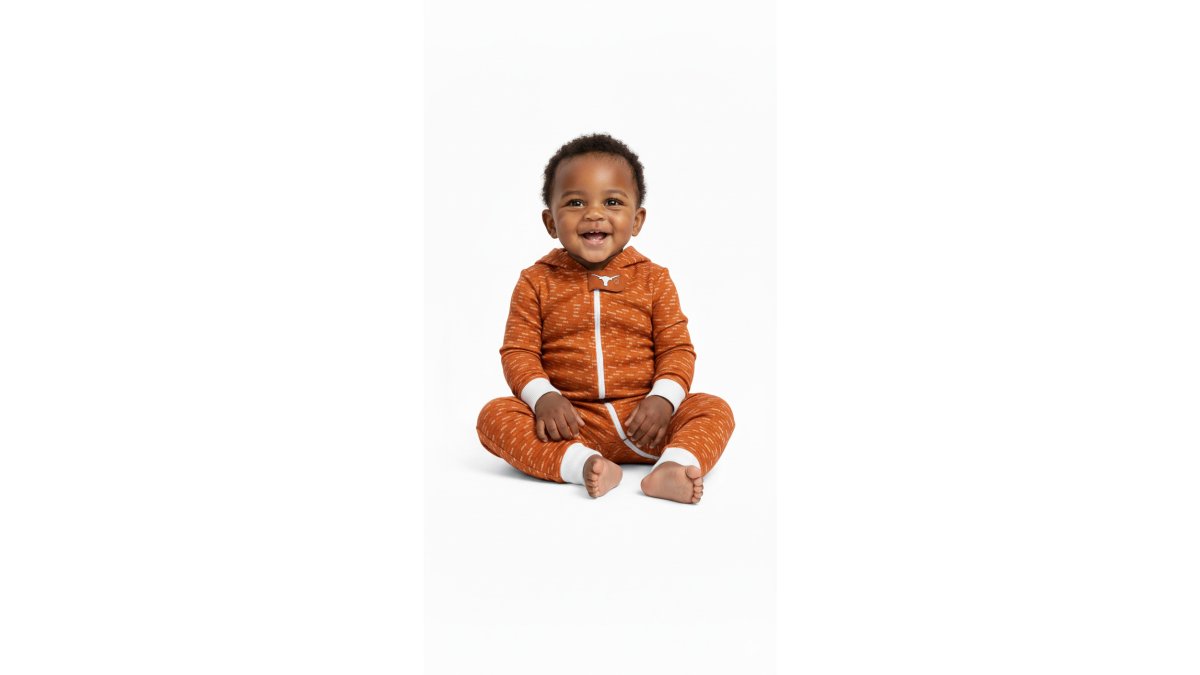
Organic and conventional cotton feel nearly identical when new; the difference shows up in processing and in what remains on the fiber after finishing.
What GOTS Actually Verifies, and What It Doesn't
The Global Organic Textile Standard, known as GOTS, covers the whole supply chain rather than just the farm. It sets limits on chemical inputs during processing and requires wastewater treatment, which matters because fiber that starts clean can pick up residue during dyeing and finishing. The GOTS certification standards spell out those processing limits in detail.
What GOTS verifies:
- Organic fiber content at a minimum threshold (95% for the "organic" grade, 70% for "made with organic")
- Restricted chemical inputs during processing, including dyes and finishes
- Wastewater treatment at processing facilities
What GOTS does not verify:
- Fit, construction quality, or durability of the finished garment
- Flame resistance or compliance with sleepwear regulations
- That the garment is free of all allergens or irritants
A cotton garment without certification is not automatically unsafe, but if chemical transparency matters to you, the label is the fastest way to check it.
OEKO-TEX and the Finishing-Stage Gap
GOTS focuses on the fiber and processing chain; OEKO-TEX Standard 100 focuses on the finished article and what remains on it. The OEKO-TEX Standard 100 criteria test for harmful substances in the finished textile, including formaldehyde, heavy metals, and certain azo dyes, with stricter limits for baby articles (Product Class I).
The practical difference: a garment can be GOTS-certified organic and still carry a finish OEKO-TEX would flag, or be OEKO-TEX certified without being organic at all. For both clean fiber and a tested finished product, look for both labels, or ask the brand which one it holds and why.
Brands often lean on one certification and imply the other. Reading the actual label, not the marketing copy, tells you which question was answered.
Key Takeaway
GOTS tells you how the fiber was grown and processed. OEKO-TEX Standard 100 tells you what was tested on the finished garment. They are complementary, not interchangeable.
Long-Staple Cotton and the Softness Claim
"Organic" describes how cotton is grown, not how it feels. Softness comes from fiber length and spinning: long-staple and extra-long-staple cotton (Pima and Supima are common trade names) spin into smoother, stronger yarns with fewer exposed ends, so they feel gentler and pill less than short-staple cotton at the same weight.
A GOTS-certified short-staple cotton sleeper can feel rougher than an uncertified long-staple one. If softness against newborn skin is the priority, check both the certification and the fiber length, the label rarely tells you the second part, so ask.
Bamboo-Derived Fabric: Cooling and Moisture-Wicking for Warmer Rooms
Bamboo-derived fabric is the better pick when your nursery runs warm or your baby sleeps damp: it wicks moisture quickly and feels cool against skin, which helps in summer and heated rooms.
The catch is in the word "derived." Most bamboo sleepwear sold today is bamboo viscose, a regenerated fiber made by dissolving bamboo pulp. It is soft and breathable, but it is a processed fiber, not a raw plant fiber, and the FTC guidance on bamboo textile claims requires sellers to label it accurately rather than calling it simply "bamboo."
Inspirational Team USA Onesies (Baby) →
Bamboo Viscose vs. Bamboo and Cotton Blend: What the Label Tells You
Pure bamboo viscose is silkier and cooler but stretches out and pills faster than cotton. A bamboo and cotton blend trades some coolness for structure and durability, holding its shape through more washes.
Read the label for percentages. "95% bamboo viscose, 5% spandex" behaves very differently from "60% cotton, 35% bamboo viscose, 5% spandex." The first is cool and drapey; the second is a balanced everyday fabric.
Watch Out
Bamboo viscose shrinks and loses shape faster in a hot dryer. Wash cold and air-dry, or you will be replacing sleepers long before your baby outgrows them.
Cotton Pajamas for Newborns: Weave, Weight, and Garment Construction
Cotton pajamas for newborns perform differently depending on weave, weight, and construction: weave controls airflow, weight controls warmth, and construction controls how the garment behaves during changes and washes.
Interlock knit is the standard for baby sleepwear: smooth on both sides, stretches in both directions, and resists curling at the edges.
Fabric weight is usually given in GSM. Lightweight knits around 150 to 180 GSM suit summer; midweight knits around 180 to 220 GSM work year-round.
Construction details that matter more than the fiber:
- Full-length zippers for fast diaper changes
- Ribbed cuffs that stay put without pinching
- Flat seams that do not rub against the back or shoulders
Our Christmas snowflake onesie uses a 95% cotton, 5% spandex knit with a full zipper, ribbed cuffs, and jogger-style pants, the construction we would specify for a newborn sleeper regardless of print.
Newborn Pajamas for Sensitive Skin: What to Avoid and What to Look For
Newborn pajamas for sensitive skin should skip rough seams, stiff trims, and heavy finishes, and favor smooth knits with tagless necks. Most irritation traces back to friction and residue, not the fiber itself.
What to avoid:
- Scratchy woven labels at the neck
- Decorative trims, sequins, or stiff appliqués near the skin
- Heavy flame-retardant finishes on tight-fitting sleepwear, which the CPSC sleepwear regulations address directly
What to look for:
- Tagless or printed neck labels
- Flatlock or covered seams
- A relaxed fit through the torso
Pro Tip
Wash new sleepwear once in fragrance-free detergent before the first wear. It removes sizing and finishing residue, and it is the single easiest step to reduce newborn skin irritation.
How to Choose Baby Sleepwear: Fit, Safe Sleep, and Seasonal Dressing
How to choose baby sleepwear comes down to fit, sleep safety, and season, in that order. Fabric is the variable parents obsess over, but fit and sleep environment matter more for safety.
Fit should be snug but not tight. A sleeper should allow full range of motion at the hips and legs without bunching, and it should not ride up over the diaper.
Safe Sleep Guidance vs. Sleepwear Warmth
Safe sleep guidance and sleepwear warmth are two different questions, and mixing them up is a common mistake. The AAP safe sleep recommendations focus on sleep position, a firm flat surface, and keeping loose bedding out of the crib.
Warmth is a separate decision. A general approach is one more layer than an adult would wear in the same room. If the nursery sits around 68 to 72°F, a single cotton sleeper usually suffices.
Seasonal dressing follows the same logic:
- Summer: lightweight cotton or muslin, one layer, fan or AC as needed
- Spring and fall: midweight cotton knit, sleep sack for cooler nights
- Winter: midweight cotton plus a heavier sleep sack, not a bulky quilted sleeper
For families who like to coordinate, our Team USA plaid onesie uses that same 95% cotton, 5% spandex blend at $19.00, and our Christmas Legacy Plaid onesie adds a hood and jogger pants at $39.00 for holiday photos.


Conclusion
Choosing the best natural fabrics for newborn sleepwear is really a decision about airflow, moisture, and construction, with fiber type as the starting point rather than the finish line. Get those three right and your baby sleeps cooler, drier, and with less fuss.
At Coordinates, we make baby pieces in soft cotton knits with full zippers, ribbed cuffs, and tagless comfort, sized from newborn up through the family range so everyone can match. Explore our baby collection and find a sleeper that works as hard as you do at 3 a.m.
Frequently Asked Questions
What is the best fabric for newborn sleepwear?
Organic cotton is the most reliable starting point for newborn sleepwear. It breathes well, wicks moisture, and holds up to repeated washing without pilling. Look for GOTS certification on the label, which verifies organic fiber content and restricts chemical processing. Bamboo-derived fabric and cotton blends are solid alternatives for warmer rooms because they feel cooler against the skin. Whichever you pick, prioritize a snug fit and a full-length zipper or snap closure so diaper changes stay quick and your baby stays comfortable overnight.
Is cotton or bamboo better for newborn pajamas?
Both work, but they solve different problems. Cotton pajamas for newborns are durable, easy to wash, and breathe consistently, which makes them a dependable everyday choice. Bamboo-derived fabric feels softer and moves heat away from the skin faster, so it suits warm bedrooms or babies who run hot. Many parents keep a few of each and rotate by season. Check the blend percentage on the label: a 95% cotton, 5% spandex mix gives stretch without losing breathability, while bamboo viscose needs gentler washing to avoid shrinkage.
What fabrics are safest for a newborn's sensitive skin?
Newborn pajamas for sensitive skin should start with natural fibers that carry a certification. GOTS-certified organic cotton is the clearest signal that a garment was made without restricted dyes and finishes. Avoid unlabeled synthetic blends and heavily printed fabrics directly against the skin. Wash new sleepwear before the first wear, use a fragrance-free detergent, and check seams and tags, since scratchy labels cause more irritation than fabric choice in many cases. If redness persists, switch to a plain, undyed cotton option.
How should newborn sleepwear fit?
Sleepwear should be snug across the torso but leave room to move the legs and arms. A tight fit reduces excess fabric that can ride up during sleep, and it keeps the garment from bunching around the face. Check that the neckline stays put, the cuffs do not dig into wrists, and the zipper or snaps lie flat. Newborn sizing runs small, so size up if your baby is long. Full zippers that run the length of the leg make overnight changes faster and keep your baby warmer during the process.
What should parents look for on a baby pajama label?
Start with fiber content and certification. A label listing GOTS-certified organic cotton tells you the fiber was grown and processed to a published standard. Note the blend: 100% cotton breathes well but stretches less, while 95% cotton with 5% spandex holds shape through washes. Check for a snug-fit statement, care instructions, and whether the garment is flame-resistant or designed to fit snugly instead. Finally, confirm the closure type, since a full zipper or snap placket makes a bigger difference to nightly routines than most fabric details.


