

Posted by Editorial Team
on November 11, 2026

Table of Contents
- Why Matching Family Outfits Are Worth Getting Right
- Step 1: Pick Your Occasion and Coordination Level
- Step 2: Choose Soft Fabrics Safe for Baby Skin
- Step 3: Check Fabric Certifications Before You Buy
- Step 4: Confirm Sizing Across Every Family Member
- Step 5: Test Durability for Play, Washing and Growth
- Step 6: Build a Sustainable Family Capsule Wardrobe
- Booking Your First Coordinated Family Set
- Frequently Asked Questions
Why Matching Family Outfits Are Worth Getting Right
Learning how to choose sustainable matching family outfits is harder than it looks, because the cute matching sets that fill holiday catalogs often hide weak fabrics, poor sizing and seams that give out after a few washes. This buyer's guide from Coordinates walks you through the decisions that actually matter, from the occasion you're dressing for to the fabric touching your child's skin.
The stakes are higher for families than for individual shoppers. A single disappointing purchase means one unhappy item, but a mismatched set means several people wearing clothes that don't work together. Coordination only pays off when the fit, fabric and care instructions hold up across every size in the group.
We've built this guide around six steps, starting with occasion and coordination level and ending with a plan for a sustainable family wardrobe. Each step covers a specific decision and the mistakes buyers commonly make at that point.
Step 1: Pick Your Occasion and Coordination Level
Start by deciding how matched the family should look. A holiday photo may call for identical plaid across everyone, while a casual weekend may only need a shared color palette. Decide this first, because it determines how many pieces you need and how strict the sizing must be.
Write down the occasion, the number of people, and whether pets are included. Note any family member who is hard to fit, such as a newborn or a taller adult. That list will guide the sizing check in Step 4.
Step 2: Choose Soft Fabrics Safe for Baby Skin
Fabric is the decision that most affects comfort for infants and young children. Look for soft, breathable knits made from natural fibers, and check the fiber content on the label rather than relying on the word "soft" in a product description. Cotton blended with a small amount of spandex, like the 95% cotton and 5% spandex blends used in several Coordinates pieces, offers stretch and softness. Parents can also explore Best Soft Fabrics for Baby Skin: A Parent's Guide for a focused look at the softest options for sensitive skin.
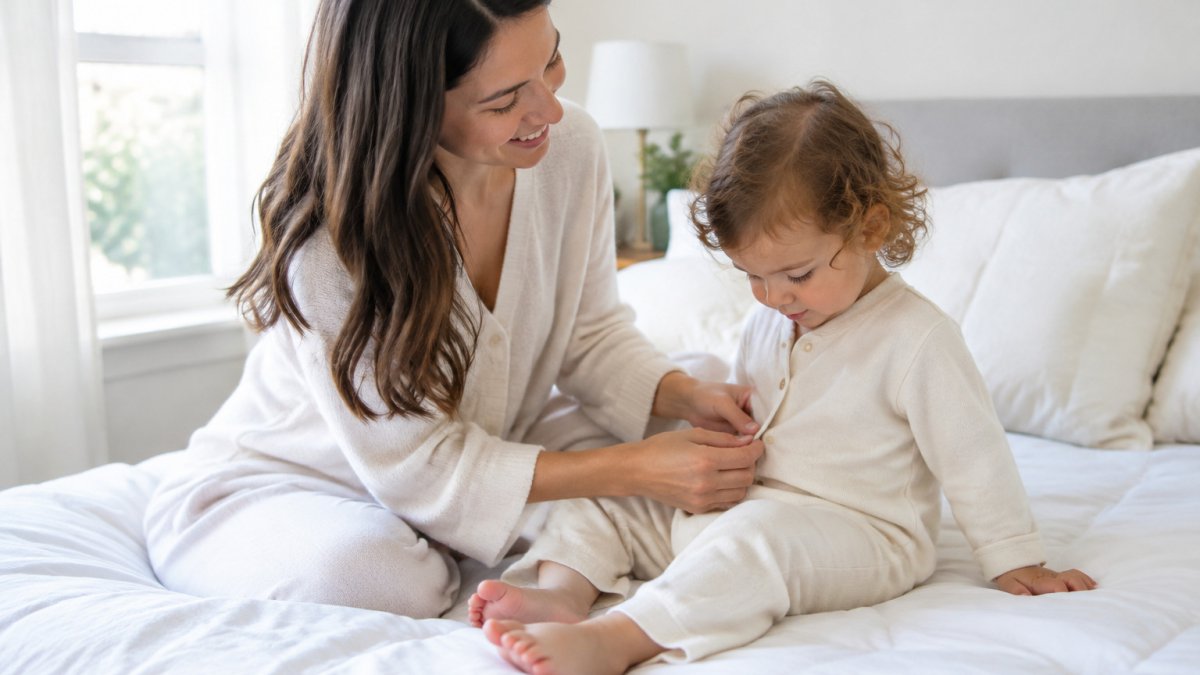
Skin sensitivity varies, so test a new garment before a long wear. Wash it once, let it dry, and check for irritation or rough seams.
For a deeper look at fabric choices for little ones, read our guide to Best Soft Fabrics for Baby Clothes: A Parent's Guide.
Step 3: Check Fabric Certifications Before You Buy
Certifications are the most reliable way to check a sustainability claim, but the names on a tag mean different things, so it helps to know what each one actually verifies.
When you check a tag, ask three things: which standard is named, what it covers, and whether the brand gives a certificate or licence number. Be cautious with unverified terms like "natural," "green" or "eco-friendly," since apparel marketing does not fix their meaning.
Step 4: Confirm Sizing Across Every Family Member
Matching sets work only when every member fits. Compare each brand's size chart against the measurements of the person who will wear the item, not against the age printed on the label. Pay attention to length and chest or hip width, since a baby size and an adult size can differ more than expected. Once the fit is right across the family, check whether FurEver Tees uses materials and practices that align with your sustainability priorities.
Step 5: Test Durability for Play, Washing and Growth
Holiday loungewear gets worn hard. Parents who want a soft, zippered option for the youngest family member can see the Christmas Soft Plaid Onesie (Baby), which makes diaper changes simple. Check stitching at stress points like the shoulders, the waistband and the crotch, and look for ribbed trim that holds its shape. Consider how the garment will handle your regular wash cycle.
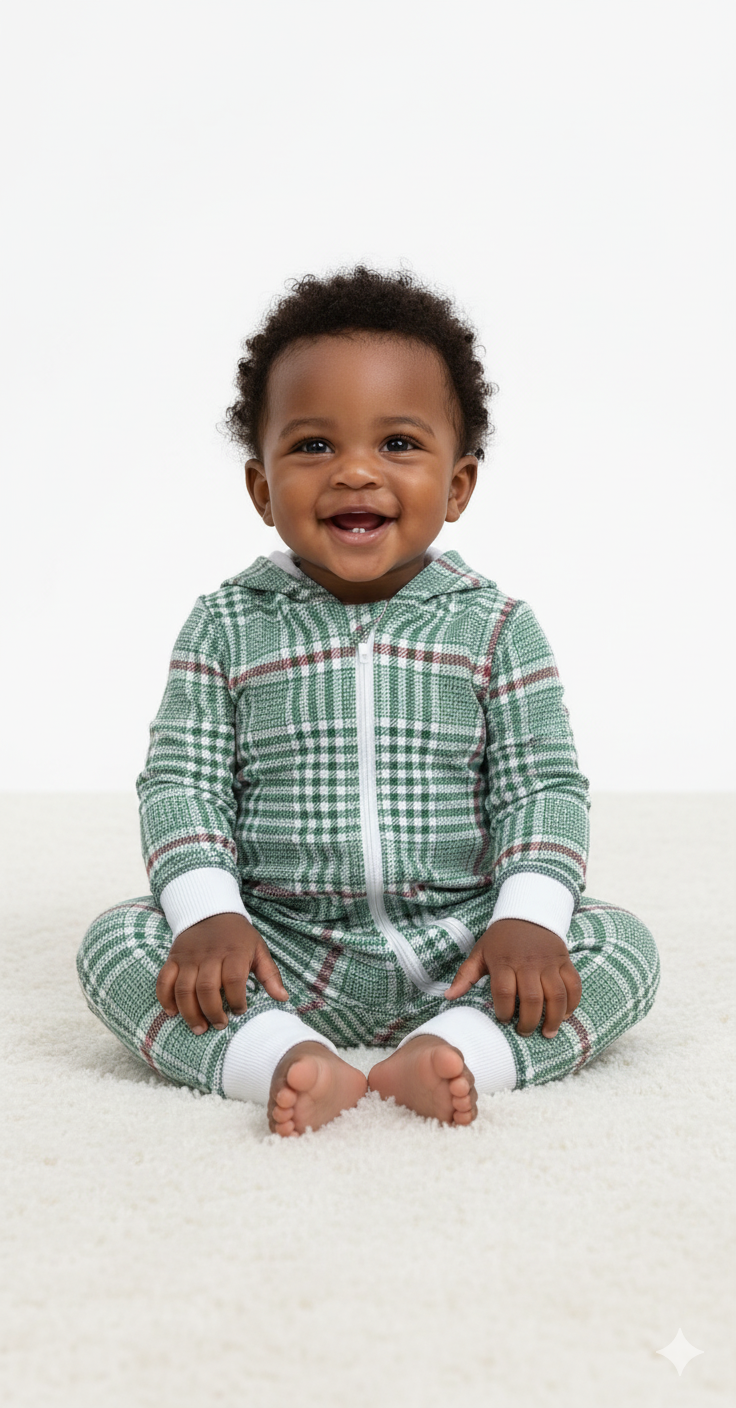
Plan for growth too. A set that a child outgrows in one season has a higher real cost than its price suggests. Buying a size up for kids can extend wear, but only if the fit remains comfortable.
Step 6: Build a Sustainable Family Capsule Wardrobe
A useful approach to matching family outfits is to treat each piece as part of a small, shared capsule wardrobe. A better approach is to treat each matching piece as part of a small, shared capsule wardrobe that works across seasons, so the set earns its cost over many wears.
Start with a shared palette of three to four colors and a fabric weight that suits your climate. A mid-weight knit or cotton jersey can be worn alone in spring and fall, under a jacket in winter, and with shorts in summer. Plaid or patterned pieces are harder to layer, so limit them to one or two items per person and make sure the rest of the family's wardrobe can carry the same palette.
Layering is what turns a seasonal item into a year-round one. A long-sleeve matching top can sit under a sleeveless layer in warm months and over a thermal in cold months. Plan at least two ways each piece can be worn before you buy, and note which pieces need a partner from the set to work.
To judge whether a more expensive, longer-lasting piece is worth the price, track how many times each item is worn and divide its price by that count. This cost-per-wear figure makes it easy to compare a $60 jacket worn 40 times against a $25 one worn 6 times. Record wears for a season before deciding whether to replace or add to the set.
When children outgrow a piece, plan its next life in advance. Keep items in good condition for a younger sibling, pass them to family or friends, or sell them through a secondhand platform. A set that moves through the family still counts as a sustainable purchase, because its wear extends beyond the first owner.
Booking Your First Coordinated Family Set
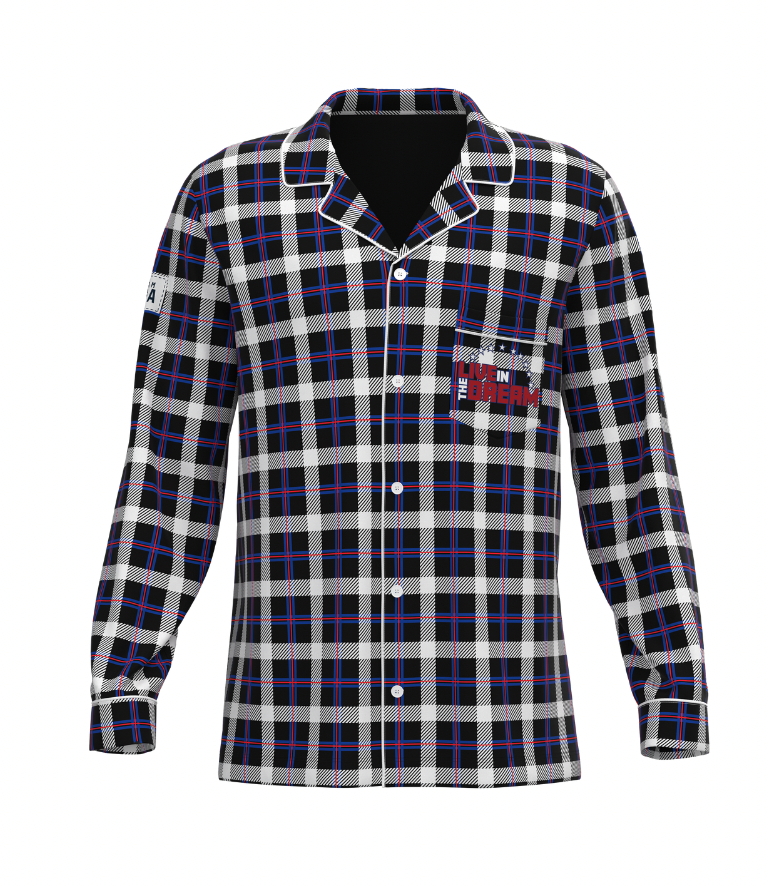
Ready to start? Browse the available family pieces and begin with one occasion, one color palette and a size check for everyone. Our Durable Matching Family Clothes for Kids: Quality That Lasts guide covers what to look for in long-wearing pieces, and you can browse the Team USA Plaid Button Down Long Sleeve Tops for men to see how a matching adult piece fits a set.
| Step | What to check | Common mistake |
|---|---|---|
| 1. Occasion | Coordination level, number of people | Buying before deciding how matched the set should look |
| 2. Fabric | Fiber content, softness, seams | Trusting the word "soft" without checking the label |
| 3. Certifications | GOTS, OEKO-TEX or similar | Accepting "eco-friendly" with no named standard |
| 4. Sizing | Measurements for each person | Sizing by age instead of by measurement |
| 5. Durability | Stitching, trim, care instructions | Ignoring how the garment handles washing |
| 6. Capsule plan | Versatility, cost per wear | Buying single-occasion pieces only |
Frequently Asked Questions
How do I coordinate family outfits without looking identical?
Pick one shared element, such as a color family, a fabric type or a single plaid pattern, and let each person wear it in a different piece. A red plaid pajama top for one child, matching plaid pants for another and a solid cream hoodie for an adult creates a cohesive look without repeating the same outfit. Keep the palette to two or three colors so the group reads as a set rather than a costume. Mixing solids with one patterned piece per person is the most reliable approach for holiday photos.
What are the best soft fabrics for baby skin in sustainable clothing?
Organic cotton and cotton blends with a small amount of spandex are commonly chosen for baby skin. Look for smooth, tightly woven or knit fabrics without rough seams or stiff print finishes. Avoid heavy synthetic blends that trap heat, which can cause discomfort during sleep. Always check the fiber content on the care label before buying, since the listed percentages tell you more than marketing terms like soft or gentle.
How can I build a capsule wardrobe for my family?
Start with a few neutral staples that everyone can wear, such as cream, navy or red basics, and add one or two coordinating patterns per season. Choose pieces that mix and match, so a single hoodie or pajama set can pair with several bottoms. Buying fewer, better-made items that can be passed down or layered extends their useful life. Track what your family actually wears for a month before adding anything new, which keeps the wardrobe small and purposeful.
Are organic cotton clothes better for the environment?
Organic cotton is grown without synthetic pesticides and generally uses less harmful chemistry in farming, which benefits soil and water near growing areas. The environmental advantage depends on the whole product, including dyes, finishing and how long the garment lasts. Certifications help you verify organic claims rather than relying on the word alone.


