

Posted by Editorial Team
on October 12, 2026

Table of Contents
- Why Coordinating Family Outfits Matters for Beach Photos
- What Colors Look Good in Family Beach Pictures
- Family Beach Photo Outfit Ideas for Every Family Member
- What to Wear for Family Beach Photos: Fabrics and Fit
- Coordinating Outfits for Family Photos Without Overdoing It
- Accessories, Footwear, and Grooming That Complete the Look
- Common Coordination Mistakes to Avoid
- Frequently Asked Questions
Last Updated: October 12, 2026
Why Coordinating Family Outfits Matters for Beach Photos
Coordinating family outfits for beach photoshoots creates visual harmony and tells a cohesive story. When family members wear complementary colors and styles, the eye moves naturally across the frame instead of getting distracted by clashing patterns or mismatched tones.
The difference shows immediately: random colors feel scattered, while coordination looks intentional and polished, professional without a stylist.
At Coordinates, we understand that family photos are keepsakes. The right coordination elevates those memories into something gallery-worthy. It's not about identical outfits, which feels forced and limits individual style, it's about choosing a color palette and silhouettes that work together harmoniously.
Beach settings present unique challenges. The sand, sky, and ocean create their own color story, so your outfits need to complement these elements, not compete with them. Bright whites wash out against the sky, and dark colors absorb heat.
What Colors Look Good in Family Beach Pictures
Soft Neutrals and Coastal Palettes
Soft neutrals and coastal colors photograph beautifully against sand and sky, creating a serene, timeless aesthetic that lets the family connection shine through rather than drawing attention to the clothes.
Cream, tan, and beige echo the sand and feel naturally cohesive. Soft blues, pale sky blue or seafoam, complement the ocean and coastal vibe, while blush tones add warmth without overwhelming the frame. These colors work across all skin tones and age groups.
Sage green sits between neutral and color, offering visual interest while staying calm and coordinated. Soft whites work too, though pure bright white creates harsh reflections, opt for cream or off-white instead.
Coastal palettes are versatile: one family member wears cream, another tan, a third soft blue. They coordinate without looking identical, and everyone finds a flattering shade within the overall palette, ideal for families with different body types and ages.
Saturated Colors for Contrast and Impact
Saturated colors create stronger contrast and visual impact. If soft neutrals feel too subtle, brighter tones deliver presence and personality.
Coral echoes sunset tones and photographs warm and inviting. Navy blue contrasts strongly against sand and sky without black's heaviness, and terracotta feels earthy and grounded. Let one or two family members wear these while others stick to neutrals to prevent chaos.
The key is balance. If everyone wears coral, the photo becomes about the color, not the family. Let one person wear the saturated tone while others wear complementary neutrals, creating a focal point and visual rhythm.
Avoid neon or overly bright shades. They look harsh in photos and date quickly. Saturated colors should feel rich and intentional, not artificial.
Family Beach Photo Outfit Ideas for Every Family Member
Outfits for Parents
Parents set the tone for coordinating family outfits for beach photoshoots, influencing what works for children and establishing the overall aesthetic.
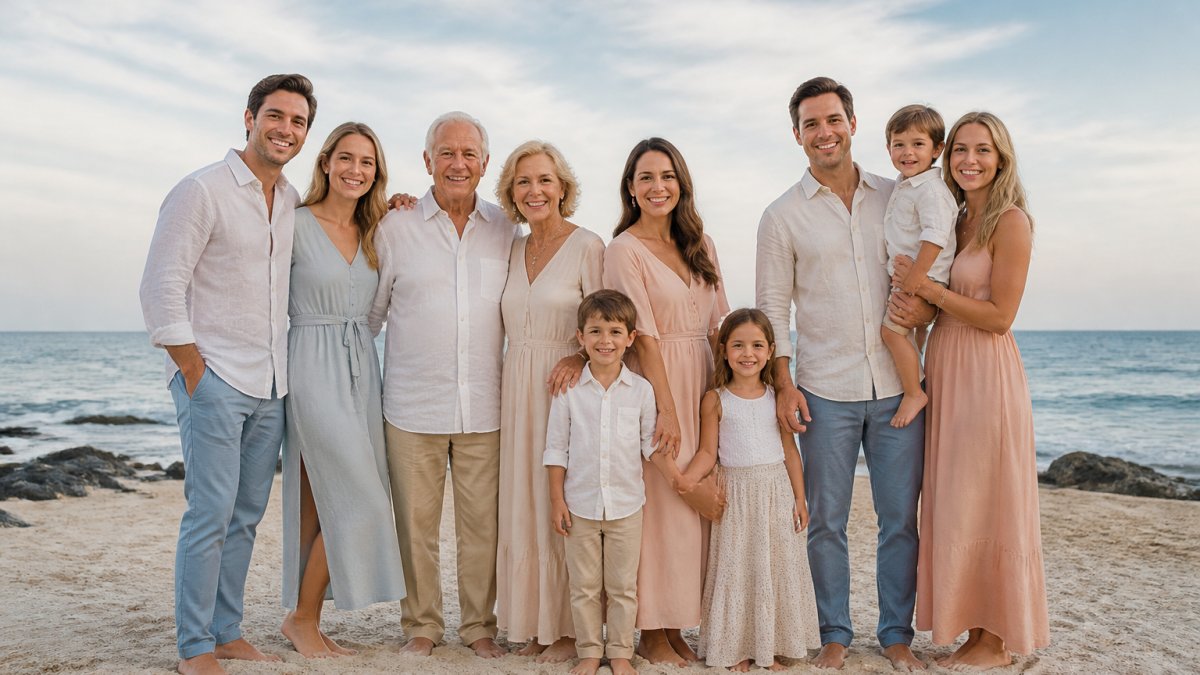
For mothers, a simple linen shirt in cream or soft blue paired with lightweight linen trousers or wide-leg pants in a complementary neutral works well. Linen breathes in warm weather and photographs beautifully.
Fathers look polished in a solid linen shirt in cream, tan, or soft blue left unbuttoned over a simple t-shirt, with lightweight chinos or linen trousers in a neutral tone. Avoid busy patterns or logos that distract from the family dynamic.
Both parents should prioritize fit: clothes should skim the body without clinging, creating clean lines and confidence. Breathable fabrics are non-negotiable at the beach.
Outfits for Children and Infants
Children's outfits should coordinate with parents while allowing room for movement and play.
For toddlers and young children, simple linen dresses or soft cotton shirts with lightweight shorts work well.
For infants, soft cotton or bamboo is essential for sensitive skin. A simple romper or dress in a coastal color keeps the baby comfortable and intentional-looking. Avoid excessive ruffles or embellishments that distract from the baby's face.
Older children can wear scaled-down versions of parents' silhouettes, a 10-year-old in linen trousers and a simple shirt in the same color family, creating cohesion while respecting their wish to feel grown-up.
The mistake many families make is forcing children into uncomfortable or overly dressy clothes. Children who feel restricted show it in their expressions, so choose pieces that let them move naturally.
Coordinating for Mixed Ages and Sizes
Families with wide age ranges and body size differences need flexibility. The solution is choosing a color palette rather than identical silhouettes.
Establish your palette first, say cream, soft blue, and tan, then each family member chooses a silhouette that flatters their body and age. A petite mother might wear a fitted dress, a taller father loose linen trousers, a teenager a simple t-shirt, a toddler a romper. Staying within the palette means they coordinate visually even though silhouettes differ.
This approach also solves sizing challenges: a husband in extended sizes can find pieces in your coordinated colors without forcing standard sizing. Versatile clothing options for the whole family matter.
Mix textures within your palette too, smooth linen alongside textured cotton adds visual interest without breaking the coordinated feel.
What to Wear for Family Beach Photos: Fabrics and Fit
Breathable Fabrics That Suit Warm Weather
Breathable fabrics are essential for beach photos. You'll stand in direct sun for 30-60 minutes, and uncomfortable fabrics lead to visible discomfort in your photos.
Linen is the gold standard: it breathes beautifully, photographs with natural texture, and feels intentional. Embrace the wrinkles, they add character and authenticity. Avoid over-starching or over-ironing.
Cotton, especially lightweight blends, breathes well, feels comfortable against skin, and photographs cleanly without excessive texture.
Bamboo is incredibly soft, breathes well, and feels luxurious, an excellent choice for families with sensitive skin or young children.
Avoid heavy fabrics like denim, thick knits, or synthetic blends. They trap heat, look uncomfortable, and photograph poorly in bright sunlight, polyester often looks plasticky in natural light.
Pro Tip
Pre-wash new fabrics before your photo session. This prevents visible discomfort from stiff, new clothing and ensures colors photograph true.
Silhouettes That Flatter and Photograph Well
Silhouette matters more than most people realize. The right cut photographs beautifully and makes everyone feel confident.
For adults, simple, well-fitted clothing works best. Avoid oversized or baggy silhouettes, which add visual bulk; choose pieces that skim the body. A fitted shirt with relaxed trousers creates better proportion than both pieces being loose.
Maxi dresses and skirts move with the breeze, creating dynamic, flowing photos, and wide-leg trousers offer similar movement. These silhouettes work across body types when fitted properly.
For children, simple is best: a basic t-shirt and shorts photographs cleaner than a busy romper, and solid colors work better than complex designs.
Avoid excessively long fabrics that drag in sand, you'll spend the session managing fabric instead of relaxing into natural poses. Midi-length often beats floor-length at the beach.
Watch Out
Avoid clothing with large logos, busy patterns, or bold graphics. These pull focus away from faces and family connection, the actual point of the photos.
Coordinating Outfits for Family Photos Without Overdoing It
Choosing a Coordinated Color Palette
The foundation of coordinating family outfits for beach photoshoots is selecting a color palette that works for everyone. This single decision simplifies everything else.
Choose 2-3 main colors as anchors, then add 1-2 accents for variety. A palette of cream, soft blue, and tan gives everyone flexibility while maintaining visual cohesion.
Consider skin tones: warm tones look better in warm neutrals like cream and tan, cool tones shine in soft blues and silvers. For mixed skin tones, soft neutrals tend to be universally flattering.
Test your palette at home: have family members wear the chosen colors, photograph them together in natural light, and adjust before committing to full outfits.
Don't overthink it, your palette just needs to feel cohesive and make everyone feel confident.
Adding Texture and Visual Interest
Solid colors can feel flat if everyone wears the same fabric and weight. Texture adds visual depth and interest.
Layer textures thoughtfully: smooth linen alongside textured cotton, flowing fabric alongside structured material. These variations create visual rhythm without breaking the coordinated feel.
Accessories add texture too: a woven belt lifts a simple linen shirt, and a textured shawl or lightweight scarf makes a solid dress look more intentional.
The goal is enough variation to feel natural and interesting, not chaotic, visual harmony with personality.
Accessories, Footwear, and Grooming That Complete the Look
Accessories complete the look without requiring everyone to match exactly, letting individual style shine through while maintaining coordination.
Jewelry should be minimal and intentional: simple gold or silver pieces beat chunky statement jewelry, and avoid anything that catches harsh sunlight and creates glare.
Footwear depends on comfort: many families go barefoot, which creates intimacy and removes a coordinating element.
Hats add personality and sun protection: straw, wide-brimmed, or simple baseball caps in neutral colors photograph beautifully and shield faces from harsh sun.
Grooming matters more than most people realize: simple, natural hair and makeup photograph best. Fresh, clean skin with minimal makeup looks more natural and timeless.
For children, keep grooming simple, a basic hairstyle that won't fall apart beats elaborate braids requiring constant adjustment.
Key Takeaway
The best accessories are ones you forget about, they enhance the overall look without demanding attention or requiring constant adjustment during photos.
Common Coordination Mistakes to Avoid
Matching too literally is the biggest mistake.
Choosing colors that don't photograph well is another common error: neon, pure black, and bright white look harsh or washed out in beach sunlight.
Ignoring comfort leads to visible discomfort: if you're tugging at a shirt or sweating through heavy fabric, your face will show it. Prioritize comfort without sacrificing style.
Overdressing is tempting but counterproductive. Beach photos work best when families look like themselves, just slightly more intentional, clothes you'd never normally wear show in your body language and expressions.
Forgetting about sand and elements is a practical mistake: choose fabrics that won't show sand easily and avoid anything too delicate. Beach environments are casual, so your outfits should be too.
Coordinating without considering individual style preferences creates resentment, especially with teenagers. Give everyone input on colors and silhouettes, when people feel heard, they feel more confident in photos.
Coordinating family outfits for beach photoshoots transforms ordinary moments into polished, memorable images. SHOP COLLECTION American Academy of Pediatrics guidance on sun protection recommends lightweight, breathable clothing as part of comprehensive sun safety during outdoor activities, which aligns perfectly with choosing the right beach photo outfits. Professional photography associations' recommendations on wardrobe selection consistently emphasize that coordinated, well-fitted clothing in complementary colors produces the strongest family portraits.
Frequently Asked Questions
What colors look good in family beach pictures?
Soft neutrals like cream, tan, and white photograph beautifully against sand and sky, creating a timeless look. Coastal colors including soft blue, blush, and sage offer gentle contrast while maintaining harmony. For stronger visual impact, consider saturated colors like coral or deeper jewel tones. Avoid neon or overly bright colors that can look harsh in natural sunlight. Choose colors that complement your family's skin tones and the time of day for your photoshoot.
How should you coordinate outfits for a family beach photoshoot without looking too matchy?
Use a coordinated color palette rather than identical outfits. Pick two to three colors that work together, then assign different pieces to different family members. For example, one parent wears a cream linen shirt while the other wears a soft blue dress, and children wear coral or tan. Vary silhouettes and patterns so each person looks like themselves. This approach creates visual cohesion in photos while allowing individuality and comfort for everyone.
What fabrics work best for family beach photos?
Breathable fabrics like linen, cotton, and lightweight blends are ideal for warm weather and allow natural movement in photos. Linen especially photographs well and feels comfortable during longer sessions. Avoid heavy materials or anything that wrinkles easily or clings uncomfortably. Fabrics with slight texture add visual interest to photos without requiring busy patterns. Well-fitting clothing in breathable materials ensures everyone looks and feels their best throughout the shoot.
Should family members wear matching outfits or coordinated styles for beach photos?
Coordinated outfits work better than matching ones for most families. Matching can feel stiff and limit styling options, especially across different ages and body types. A coordinated approach uses a shared color palette or theme while allowing each person to wear pieces that flatter their individual shape and personality. This creates a polished, intentional look in photos while respecting everyone's comfort and style preferences. Coordinated outfits also photograph more naturally and feel less staged.



