

Posted by Editorial Team
on September 23, 2026

Table of Contents
- What Makes Matching Family Clothes Feel Modern vs. Cheesy
- Family Photo Outfit Color Schemes That Actually Work
- How to Coordinate Family Outfits for Photos Without Overdoing It
- Choosing Fabrics and Materials That Feel Comfortable
- Building a Capsule Wardrobe Approach to Matching Outfits
- Matching Family Clothes for Different Occasions
- Sustainable and Ethical Sourcing for Family Apparel
- Frequently Asked Questions
Last Updated: September 22, 2026
What Makes Matching Family Clothes Feel Modern vs. Cheesy
Modern coordinated family outfits feel intentional rather than costume-like through saturation control, texture layering, and pattern hierarchy.
The Saturation Rule: Modern coordinated outfits use muted colors (dusty sage, warm taupe, navy, cream) that photograph well and age timely. High-saturation colors photograph harshly and date quickly. When evaluating a matching set, ask: would this color look good in a photo from five years ago?
The Texture Mixing Principle: Identical fabrics create costume uniformity; modern matching pairs different textures in the same color family. Smooth cotton with textured linen, flat cotton with subtle corduroy, or matte cotton with soft fleece signals intentional design rather than forced matching.
The Pattern Hierarchy Rule: Use one coordinating pattern (plaid, stripe, or print) on one person or piece, with solid colors on everyone else. This creates visual interest without costume uniformity. The rule is asymmetry within coordination, it feels modern because it's not perfectly matched.
The Fit Variation Strategy: Vary silhouettes within the same color palette, one relaxed fit, one tapered, one straight cut. This signals intentional coordination rather than team uniformity.
Putting It Together: Start with a desaturated neutral base (cream, warm gray, navy, soft sage), add one texture variation per person, one optional pattern element, and vary fits. This signals design intention rather than costume uniformity. The best matching family clothes collections offer flexibility, wear pieces solo, mix with non-coordinating items, or go full ensemble for photos.
tip Use the saturation test: if a color looks "loud" or "neon," desaturate it one shade. Use texture mixing: pair smooth fabrics with textured ones in the same color. Use pattern hierarchy: one coordinating pattern element per family, not identical patterns across everyone. Use fit variation: same color, different silhouettes.
Family Photo Outfit Color Schemes That Actually Work
Warm neutral palettes (cream, tan, warm gray, rust) photograph beautifully and work across skin tones. Cool palettes (navy, slate, cool gray) create depth for formal portraits. Monochromatic with accent (all navy with white accents) creates sophistication. Avoid neon, bright primary colors, and highly saturated jewel tones. Choose one neutral base and let pieces vary in shade and texture.
Consider season and setting: warm tones suit fall and winter, cool tones work year-round. Test colors under your actual lighting, daylight and indoor bulbs render colors differently.
Key Takeaway
Neutral color palettes (cream, warm gray, navy) photograph best and age well in photos you'll keep for years. Avoid high-saturation colors that compete with faces or feel dated quickly.
How to Coordinate Family Outfits for Photos Without Overdoing It
Match one or two elements and let the rest vary. This creates visual cohesion while maintaining individual style.
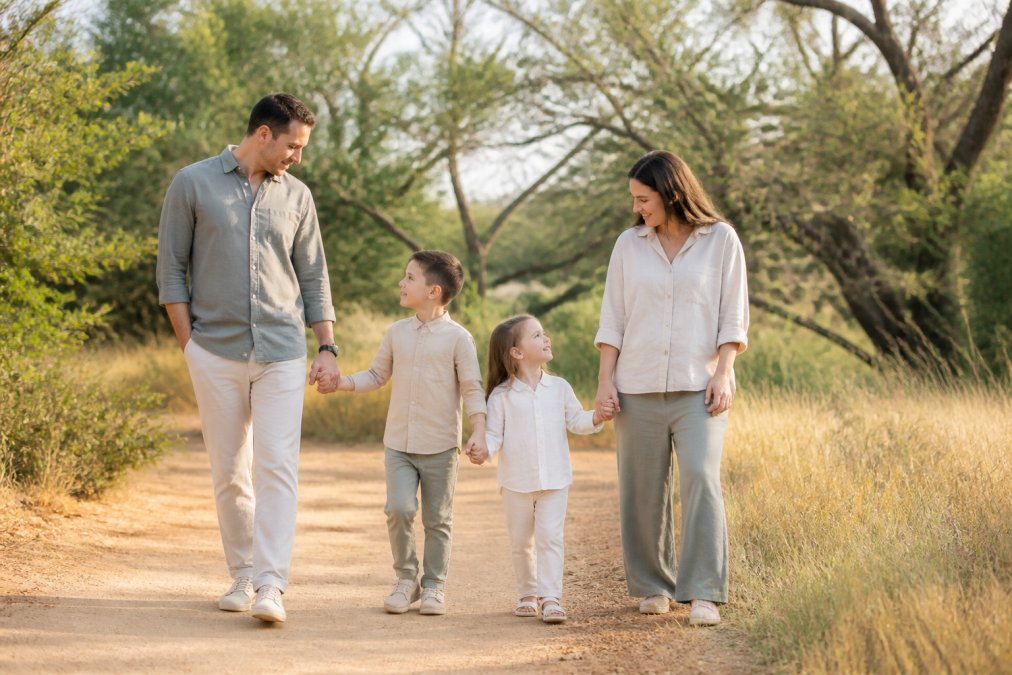
Everyone wears the same top or pants, varying the other piece, or choose a color palette and let each person select different textures and fits. This feels like a styling choice rather than costume requirement.
The Coordinates Christmas Legacy Plaid collection demonstrates this principle. Families can wear the button-down top and relaxed-fit pants together or pair either piece with solid basics.


Coordinate for the photo session only, then change into everyday clothes. This prevents stiff, overdressed photos.
Choosing Fabrics and Materials That Feel Comfortable
Premium matching family clothes depend on fabric quality. A 95% cotton, 5% spandex blend offers breathability, stretch, and durability that synthetic blends cannot match.
Cotton-dominant blends breathe better than polyester, maintain softness through washing, and feel intentional rather than costume-like. A small spandex percentage provides recovery and comfort without synthetic feel.
Check fiber content first. Look for cotton, linen, or cotton blends. Avoid 100% polyester or polyester-heavy blends.
Weight and drape matter as much as fiber content. Heavier fabrics feel substantial and last longer. The Legacy Plaid Sweatshirt uses a soft terry blend.

Watch Out
Avoid polyester-heavy blends and cheap knits that pill after a few washes or feel scratchy against children's skin. These materials undermine the entire point of coordinated family clothes by feeling uncomfortable and looking worn quickly.
Building a Capsule Wardrobe Approach to Matching Outfits
Build a capsule wardrobe where pieces coordinate across multiple outfits and seasons, rather than buying complete sets for one occasion. This maximizes versatility, spreads cost, and ensures your investment works harder across the year.
The Capsule Foundation (Core Pieces)
Start with five to seven core pieces:
- Two neutral base tops (cream button-down, navy sweatshirt)
- Two neutral base bottoms (gray relaxed-fit pants, cream joggers)
- One patterned piece (plaid button-down or patterned sweatshirt)
- One seasonal accent piece (rust sweater for fall, lightweight linen for summer)
For a family of four, this means 20-28 pieces total, not 4-8 complete sets. Cost spreads across three to four months rather than one large investment.
Cross-Wear Combinations: The ROI Multiplier
Legacy Plaid Swaetshirt (Unisex) →
Most pieces coordinate with most others. A cream button-down works with gray pants, navy pants, rust pants, and plaid pants, one piece in four combinations. Multiply across five to seven core pieces and a single purchase creates dozens of outfit options.
Seasonal Rotation Strategy
Rotate pieces seasonally: lightweight cotton and linen for spring/summer, heavier sweatshirts and fleece for fall/winter, neutral button-downs and pants year-round. This reduces storage and increases wear per piece.
Building Timeline and Cost Spread
Build your capsule over time instead of investing $300-500 in one set. Month 1: two neutral tops and one pair of pants per person. Month 2: second pair of pants and one patterned piece. Month 3: seasonal accent piece. By month three, you have a functional capsule with dozens of outfit combinations.
Practical Example: The Neutral Earth Tone Capsule
Core pieces (per person): Cream button-down, navy sweatshirt, gray relaxed-fit pants, cream joggers, rust accent piece.
Five pieces per person create nine distinct outfit combinations. Add a patterned piece and combinations multiply. You're building a coordinated wardrobe where most pieces work together.
Longevity and Hand-Me-Down Potential
Capsule pieces designed for coordination often have longer lifespans because they're not trend-dependent. A neutral cream button-down works for multiple children across multiple years. A patterned piece that coordinates with your entire capsule gets worn more frequently and lasts longer through multiple children. This extends the ROI significantly, a piece worn by three children across six years costs pennies per wear.
When to Add vs. When to Rotate
Add new pieces when:
- You need a new seasonal rotation (fall sweaters, summer linens)
- Your capsule has gaps (you need more bottoms or more tops)
- A piece wears out after years of use
Rotate existing pieces when:
- Seasons change and you're storing off-season items
- A piece needs washing and you need a backup
- You want to refresh the visual feel without buying new items
This distinction keeps the capsule intentional and prevents impulse purchases that don't coordinate.
takeaway A capsule wardrobe of 5-7 core pieces per person creates dozens of outfit combinations, spreads cost over time, and increases longevity through hand-me-downs. This approach maximizes the ROI of matching family clothes by ensuring every piece works with most other pieces.
Matching Family Clothes for Different Occasions
Different occasions call for different levels of coordination. Understanding where matching family clothes fit into your wardrobe helps you choose the right pieces for the right moments.
Holiday gatherings are the obvious choice for full coordination. This is when matching family clothes shine, everyone in the same plaid pattern or coordinated neutrals creates a cohesive family photo without feeling forced.
Sustainable and Ethical Sourcing for Family Apparel
Quality matching family clothes inherently last longer and reduce waste. When you invest in pieces made from durable natural fibers that hold up through multiple washes and years of wear, you're making a sustainable choice compared to alternatives that fall apart after a season.
| Occasion | Coordination Level | Best Approach | Coordinates Recommendation |
|---|---|---|---|
| Holiday photos | Full matching | Same pattern or color palette | Christmas Legacy Plaid collection |
| Family portraits | Coordinated but subtle | Matching color palette, varied pieces | Neutral base pieces mixed with individual items |
| Casual everyday | Minimal coordination | Color palette matching | Legacy Plaid Sweatshirt with coordinating basics |
| Vacation/resort wear | Selective coordination | 1-2 coordinated outfits per week | Mix coordinated pieces with individual vacation clothing |
| Loungewear | Full coordination | Same pattern or color | Christmas Legacy Plaid or Legacy Plaid pieces |
Frequently Asked Questions
What's the difference between coordinated and matchy-matchy matching family clothes?
Coordinated outfits share a unifying element like color palette, texture, or print style while allowing individual pieces to vary. Matchy-matchy means everyone wears identical or nearly identical items. Coordinated feels intentional and modern; matchy-matchy can feel forced. For example, a family might all wear cream and navy pieces in different silhouettes rather than everyone in the same plaid pajamas. This approach respects individual style while creating visual unity.
How do I choose the best family photo outfit color schemes?
Start with a neutral base like cream, white, gray, or navy, then add one accent color everyone wears in different ways. Earth tones (sage, terracotta, warm brown) photograph beautifully and feel timeless. Avoid neon or overly trendy colors that date photos quickly. Consider your location: pastels work for spring gardens, jewel tones for winter settings, and neutrals suit any backdrop. Test colors in natural light before committing, and ensure all ages look good in your chosen palette, what flatters a toddler may not suit a teenager.
Can I make matching family clothes work if my family members have very different styles?
Absolutely. Focus on coordinating one element, color, print, or fabric, while letting each person choose their own silhouette. A family could all wear cream and forest-green pieces but in different cuts: a hoodie, a button-down, a t-shirt, and a dress. This strategy respects individual preference while maintaining visual cohesion. Another approach: coordinate accessories like scarves or jewelry instead of full outfits. This gives everyone autonomy while keeping the 'coordinated' feeling intact.
What materials work best for comfortable, durable matching family clothes?
Look for natural, breathable fabrics like cotton blends that offer softness without sacrificing durability. The best options include 95% cotton with 5% spandex, which provides stretch and recovery while remaining comfortable against skin. Avoid synthetic blends that trap heat or feel stiff. Check product descriptions for fabric weight and care instructions, quality pieces should survive multiple washes without pilling or fading. Higher-quality fabrics justify the investment since they'll last through multiple kids or seasons.



